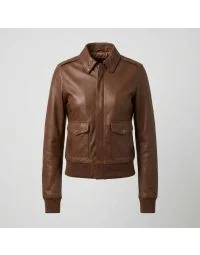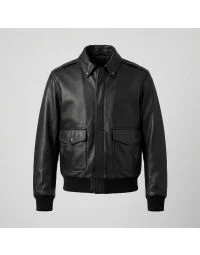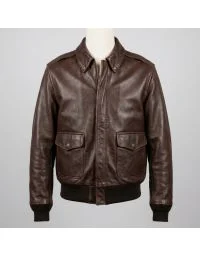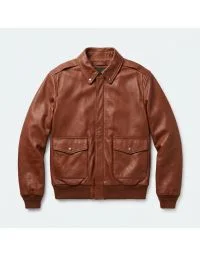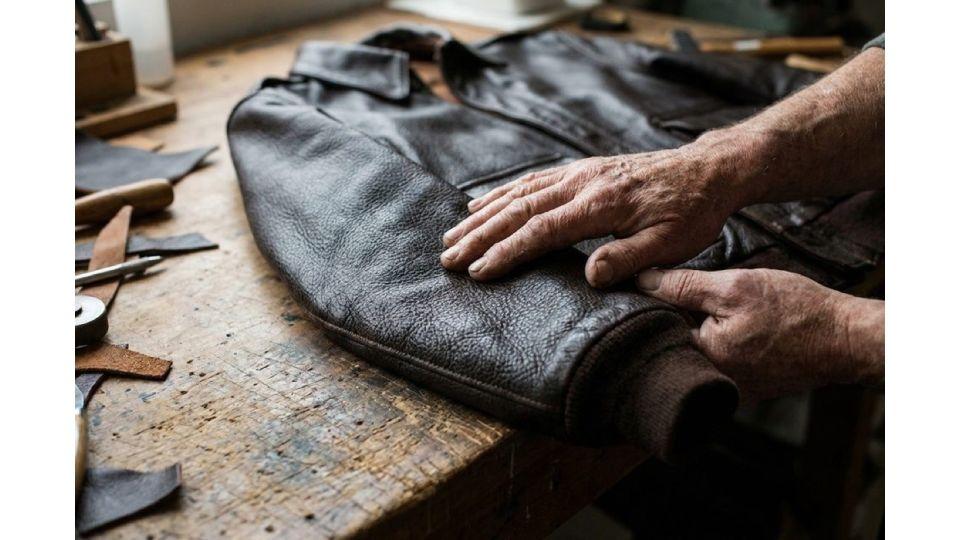
Full-grain leather is leather that keeps the hide's complete original outer surface, the grain, with nothing sanded, buffed or split away. Because that tight outer layer is intact, full-grain is usually the strongest and most breathable leather, shows natural marks and pores, and develops a patina with wear. Top-grain, corrected, split, genuine and bonded leather each have more of that surface altered or removed, or are made from lower layers or scraps.
For jacket buyers, the grade is only part of the picture. The finish, the animal and the tannery matter just as much, and some grade words are used loosely in marketing. Here is how to read them.
A quick look inside a hide
A tanned hide has two main zones. The grain is the outer layer, where hair grew. Its fibers are fine and tightly packed, which gives strength and a smooth face. Below it is the corium, a looser network of thicker fibers. A thick hide can be run through a splitting machine to separate the grain layer from the lower layers. Everything in the grade ladder follows from what is done to that grain layer, or whether it is there at all.
The leather-grade ladder
| Grade | What was done to the surface | How it looks in a jacket | How it ages | Watch for in listings |
|---|---|---|---|---|
| Full-grain | Nothing removed; hair and outer skin off, grain intact | Visible pores, small scars, natural variation between panels | Softens, molds to you, develops patina | Usually stated proudly; check whether it is also aniline or heavily finished |
| Top-grain | Grain layer kept but surface lightly sanded or buffed, then finished | Smoother, more uniform, fewer visible marks | Wears well, less patina, finish can scuff | Some sellers use top-grain to mean any grain-side leather, including full-grain; ask |
| Corrected grain | Surface buffed more heavily, then embossed with an artificial grain and pigmented | Very even, slightly plastic look; repeating grain pattern | Little patina; the coating can crack at creases | Often sold as top-grain or just leather |
| Split (suede or coated) | Grain removed; made from the lower layer. Napped for suede, or coated and embossed to look like grain | Suede: fuzzy nap. Coated split: glossy, uniform, stiff | Suede wears well but marks easily; coated split can peel | Coated split may be called bicast or PU leather |
| Genuine leather | Not a grade; a marketing phrase meaning it is real leather | Anything from decent to poor | Depends entirely on what it actually is | When a label says only this, it often hides a lower grade |
| Bonded or reconstituted | Leather scraps and fibers ground up and bound with adhesive, then surfaced | Uniform, often with a coated face | Can delaminate and peel | Rare in jackets; more common in belts, book covers and furniture |
Grade is not the same as finish
A second label axis trips up many buyers: how the surface is finished.
- Aniline: dyed through with soluble dyes and little or no surface coating. Only good full-grain hides are usually finished this way, because every mark shows. Feels warm and natural, marks easily, ages beautifully.
- Semi-aniline: a light protective coat with a little pigment. A middle ground of character and practicality.
- Pigmented or finished: an opaque color coat on top. Most resistant to stains and rain, least patina. Common on corrected grain, but full-grain can be pigmented too.
So a full-grain, pigmented jacket and a full-grain, aniline jacket will look and wear very differently. When you shop, ask about both.
What the law says (and does not say)
In the US, the Federal Trade Commission's Guides for Select Leather and Imitation Leather Products say sellers should not misrepresent composition, should disclose imitation leather, embossed or processed leather made to look like another kind, and ground or bonded leather. Those guides are written for products such as luggage, handbags, wallets, belts and footwear; jackets are not on the list, though general rules against deceptive advertising still apply. In practice, US jacket labels rarely define terms like full-grain or top-grain to any standard.
Some European countries are stricter. Italy and Portugal have passed laws that define full-grain leather as leather that keeps its original grain surface with none removed by buffing, snuffing or splitting, and set limits on how thick a surface coating can be before the product must be described as coated leather.
Why full-grain suits a flight jacket
The original World War II flight jackets were made for hard use in open, cold, windy aircraft, and the leathers chosen reflected that. A-2 jackets were typically horsehide and the Navy's G-1 was goatskin, both used with their grain intact. That is why so many people associate a good flight jacket with leather that creases, darkens and becomes personal over years. You can see the look in our A-2 flight jackets, which are made in the pattern of the originals.
Full-grain is not automatically better for every buyer. Corrected or pigmented leather can be the more practical choice if you want a uniform look that shrugs off rain and needs little care. Full-grain, especially aniline, rewards owners who like the way leather changes.
Full-grain vs top-grain: the honest comparison
| Factor | Full-grain | Top-grain (sanded and finished) |
|---|---|---|
| Strength and abrasion resistance | Highest; tight outer fibers intact | Slightly lower; outermost layer reduced |
| Breathability | Good, especially with a light finish | Lower if heavily coated |
| Look when new | Natural variation, visible pores | Clean and uniform |
| Look after years | Patina, personal creasing | Much the same as new, until the finish wears |
| Care | More sensitive to water and stains if aniline | Easier day to day |
| Cost | Usually higher | Usually lower |
How to check what you are buying
- Read the full description. Look for both the grade and the finish, and the animal: cowhide, horsehide, goatskin or lambskin. Our guide to horsehide vs cowhide vs goatskin vs lambskin explains how the animal changes the jacket.
- Look closely at photos. Irregular pores and small natural marks suggest full-grain. A perfectly repeating pattern suggests embossing.
- Ask the seller. A good seller can tell you the grade, finish and hide. Vague answers are information too.
- Weigh the price. Full-grain hides cost more to buy and to cut, because there is less room to hide flaws. Our article on why leather jackets are so expensive breaks down where the money goes.
- Learn the basic tells. Our guide to real vs fake leather covers seven checks you can do in person or from photos.
When you browse our leather jackets, each product page lists the hide and finish. Each jacket is made to order, either in a standard size from the size guide or Made to measure with your own measurements; see how made to measure works.
FAQ
Is full-grain leather the same as genuine leather?
No. Full-grain describes a specific grade. Genuine leather only means it is real leather, and in marketing it is often used for lower grades such as splits.
Is top-grain leather bad?
No. Sanded and finished top-grain is durable, consistent and easy to look after. It simply will not develop the same patina as full-grain.
Is suede full-grain?
Usually not. Most suede is made from the split, the lower layer of the hide. Some napped leathers, like nubuck, are made from the grain side by buffing it. See suede vs leather for more.
Does full-grain leather crack?
It resists cracking better than coated leathers, but any leather can crack if it dries out badly. Occasional cleaning and light conditioning prevent it.
Sources
US labeling guidance comes from the Federal Trade Commission's Guides for Select Leather and Imitation Leather Products, 16 CFR 24.2 and the scope in 16 CFR 24.0. European definitions are summarized from TÜV SÜD's summary of Portugal's leather terminology decree, which follows Italy's earlier law.