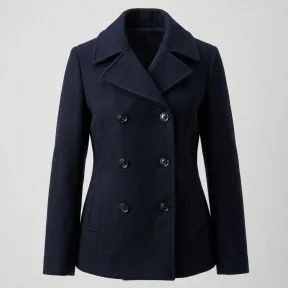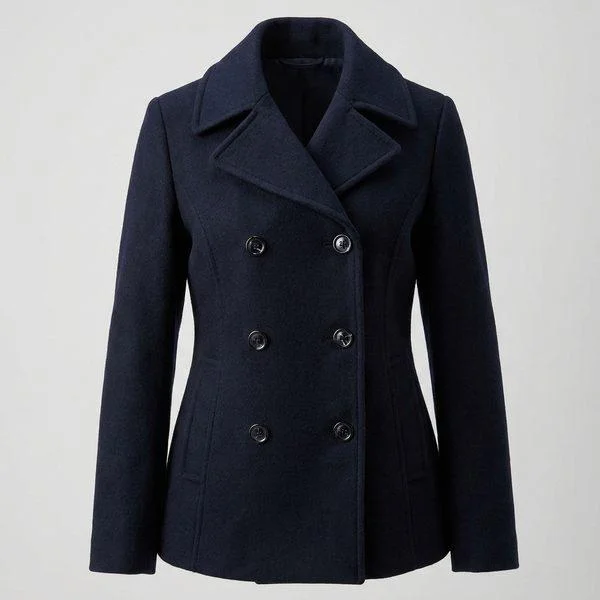
Peacoat
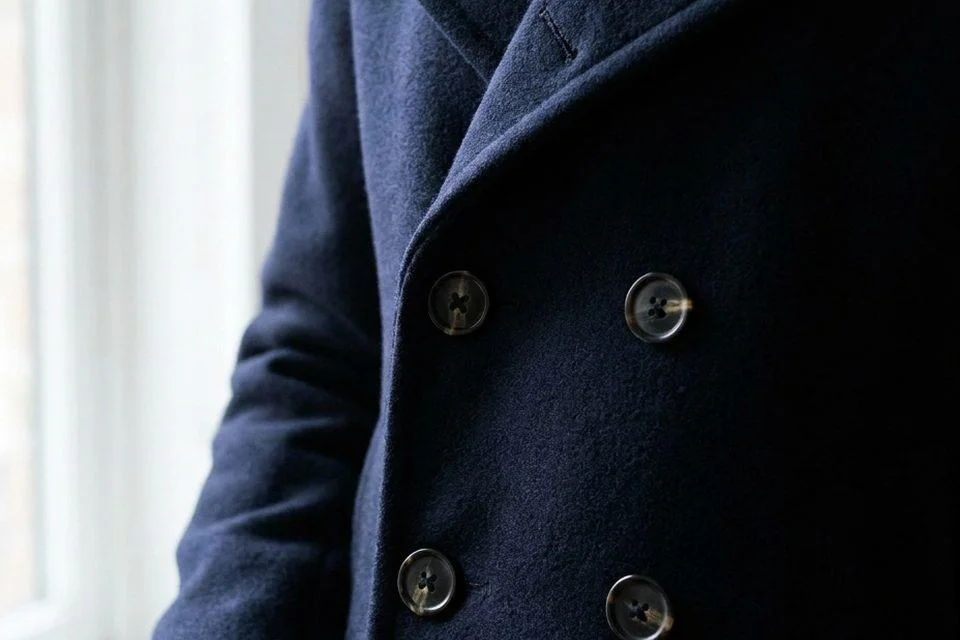
- Double-breasted wool
- Broad lapels
- Covers a blazer
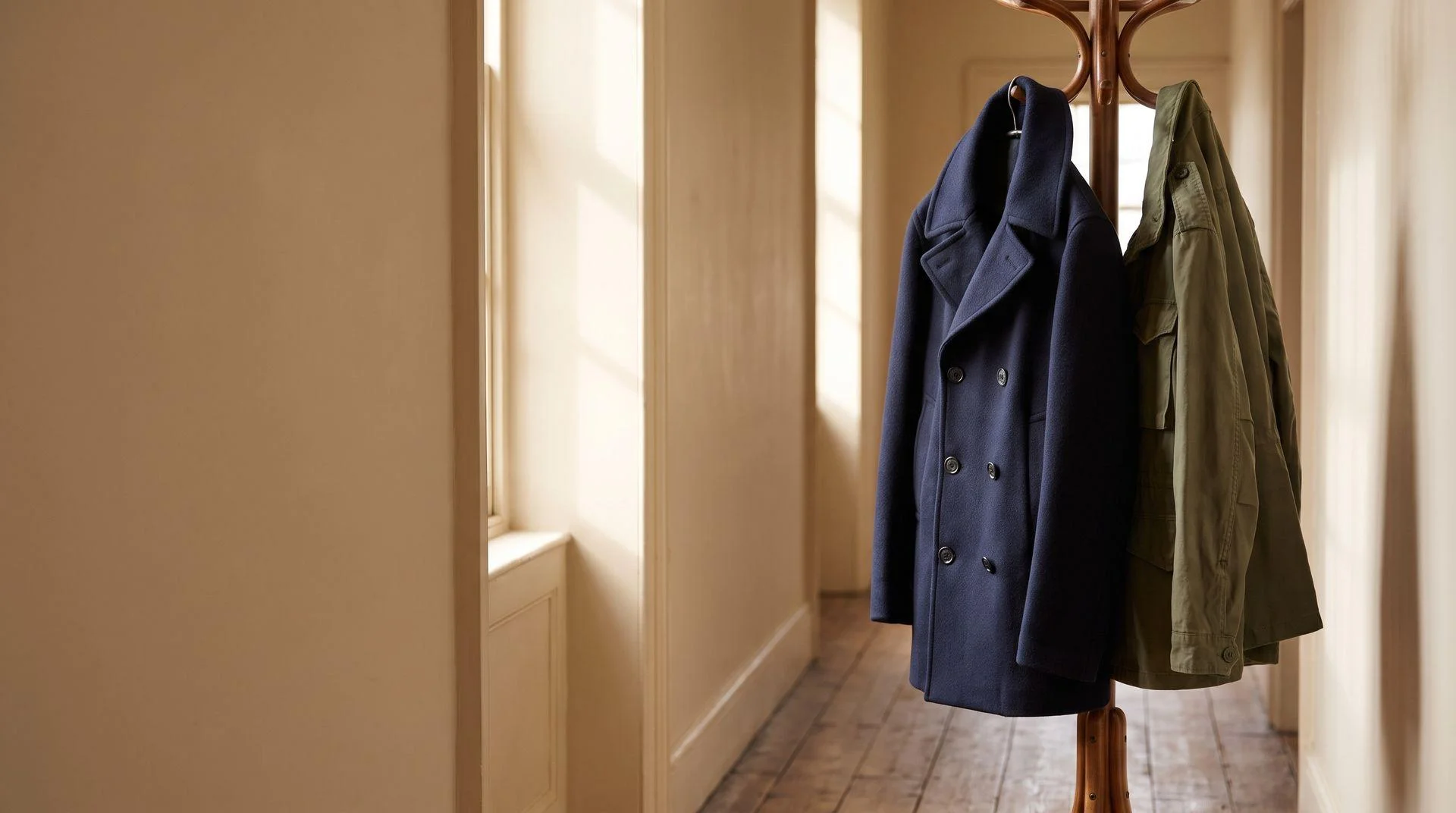
Dressy or easy.
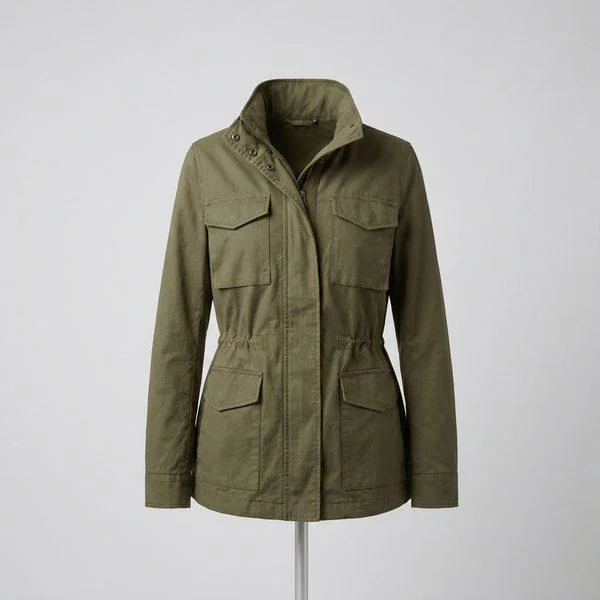

A longer, dressier partner to the flight jacket.
Every coat is made to order. Choose a women’s size from the body-measurement chart, or give us your bust, waist, hips, shoulders, sleeve and back length for a jacket cut to your shape.
Reading the label
More wool means more warmth and a crisper drape. Each product page lists the fabric content.
A women's peacoat is the longer, dressier partner to a flight jacket. It is a double-breasted wool coat with broad lapels, a naval heritage and enough length to cover a blazer or a heavy knit. Alongside it you'll find women's field jackets: cotton, multi-pocket and easy to throw on. Each product page lists the fabric content and lining, and every coat is made to order in your chosen size and options.
Peacoats follow a naval pattern; field jackets follow military-pattern field wear.
Wool or wool blends for peacoats; cotton or cotton blends for field jackets.
Peacoats: cold, dry days. Field jackets: cool weather and layering (guidance, not a rating).
Work, city commutes and smart-casual outfits where a short jacket feels too casual.
Two numbers tell you most of what a wool coat will do: the wool percentage and the fabric weight. Not every label lists weight, but every product page here lists the fabric content.
| What the label says | What it usually means | Good for |
|---|---|---|
| 80–100% wool | Warmest and most breathable; resists light rain and holds its shape | Real winters and years of wear |
| 50–80% wool, rest synthetic | Still warm; the synthetic adds strength and lowers cost, with a little less breathability | Everyday city wear in moderate cold |
| Under 50% wool | Looks like wool, but warmth and drape depend mostly on the synthetic | Mild winters, or as a style piece |
| Melton or heavy wool, high oz weight | Dense, felted cloth that blocks wind well; feels stiff at first | Exposed, windy conditions |
| Lighter wool, lower oz weight | Softer drape; easier to wear indoors; less wind-blocking | Layering and transitional seasons |
This is a rough guide. Weave, lining and fit change how warm any coat feels.
| Fitted cut | Heritage cut | |
|---|---|---|
| Shape | Shaped waist, narrower shoulders | Straighter body, squarer shoulders, closer to the original pattern |
| Length | Often hip length or just below | Hip to upper-thigh length |
| Layering | A fine knit or blouse underneath | Room for a thick sweater or blazer |
| Choose it if… | You want a tailored, polished line | You want an easy, roomy coat that looks the part |
Some coats here are women's patterns and some come in men's sizes. The size guide on each product page shows which, with body measurements for each size. A longer coat has to fit bust and hip at once, so if you're petite, plus size or your bust and hip fall in different sizes, choose Made to measure and enter your own measurements. See how made to measure works.
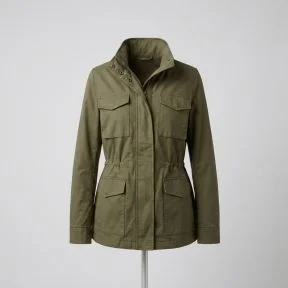
A women's field jacket is the casual option: cotton or cotton-blend twill, four front pockets and a drawcord waist on many styles. It is military-inspired, not military-issue. It works over a hoodie in autumn and under a coat in winter. For the full M-65 and M-51 story, see our M-65 & field jackets.
A high-wool peacoat over a sweater handles cold, dry winter days. In wet snow, add a scarf and consider a heavier coat. That's guidance, not a rating.
Follow the label. Most need dry cleaning. Brush it after wear and hang it on a wide hanger to keep the shoulders in shape.
A peacoat is heavy wool and tailored. A field jacket is lighter cotton and utilitarian. Many people own one of each.