
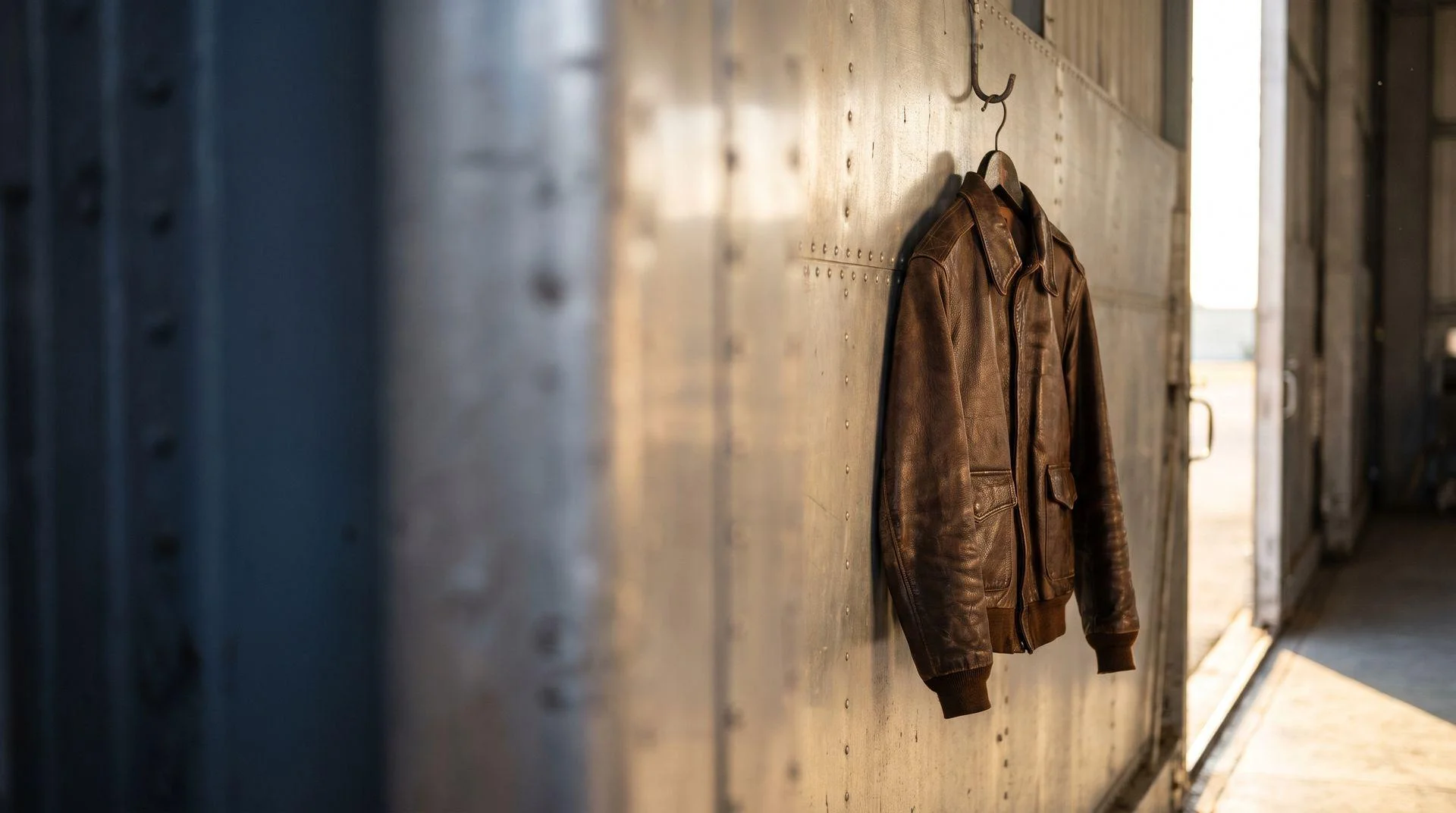
Every jacket made to order · Your size or made to measure · Free worldwide shipping over $299
1931Adopted for aircrew
3Hides: horse, goat, cow
2Snap-flap pockets
KnitCuffs and waistband
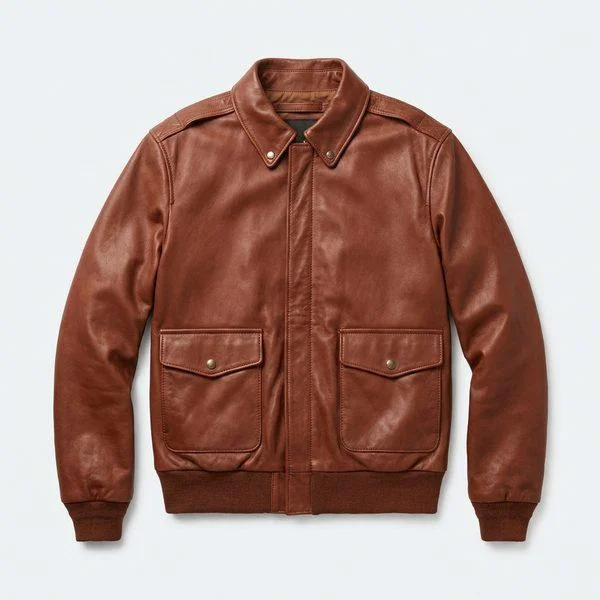
Anatomy
What makes an A-2
- Shirt collarPointed, with snaps to hold the tips down in the wind.
- EpaulettesShoulder straps on both sides.
- Storm flapA leather flap hides the front zip.
- Patch pocketsTwo large front pockets with snap flaps.
- Knit trimCuffs and waistband keep the cold out.
Shop A-2 jackets
Horsehide, goatskin and cowhide.
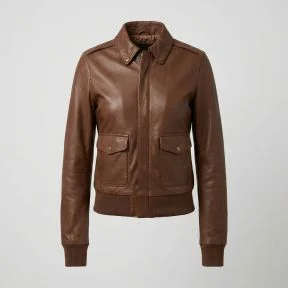
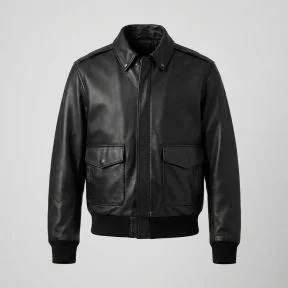
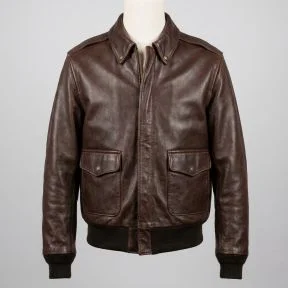
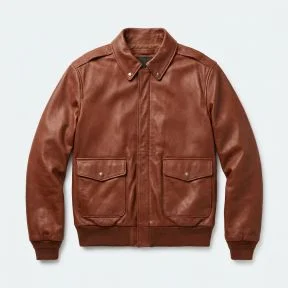
Made to order
Your A-2, made to order
Every A-2 is cut and sewn after you order: in a standard size from our body-measurement chart, or made to measure from your chest, waist, shoulders, sleeve and back length. Then choose the lining, hardware and fit.
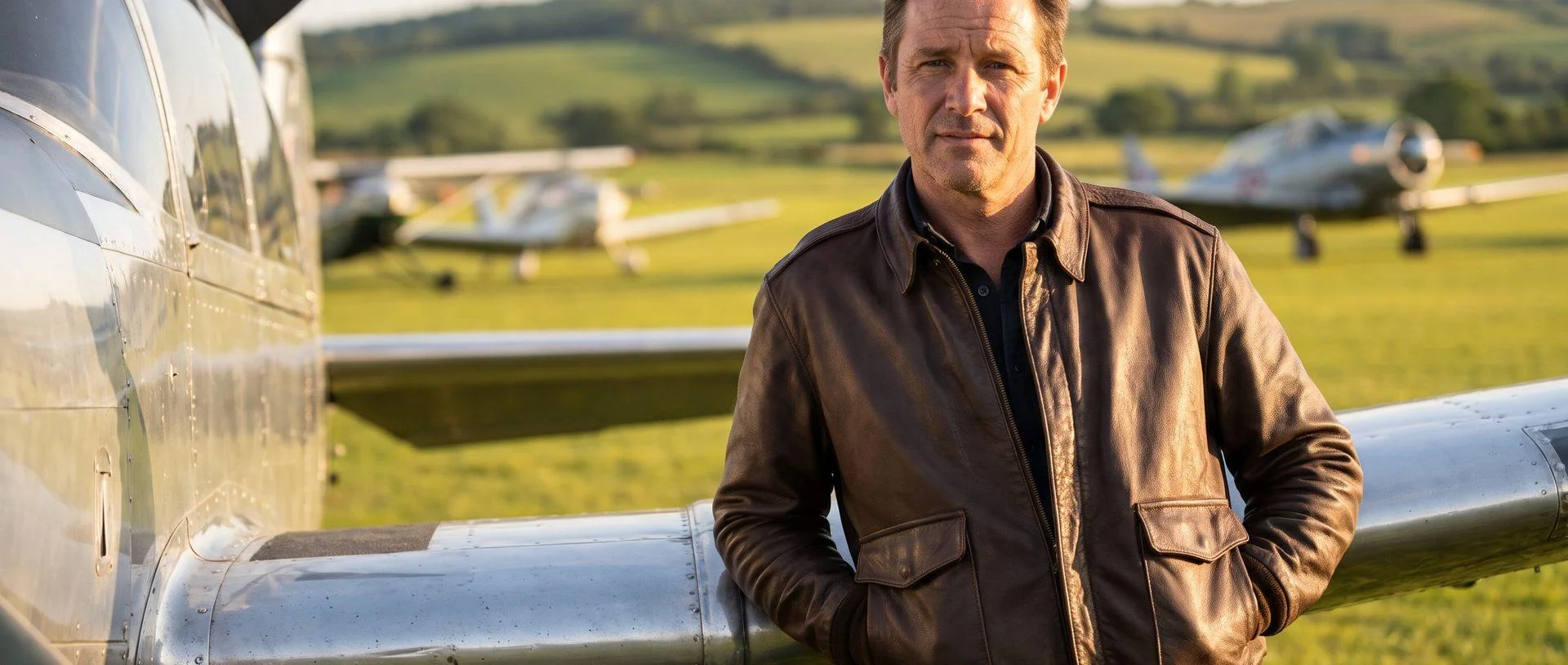
The original leather flight jacket
Cut short, worn everywhere.
From cockpit to street
- 1931Adopted as the standard leather flight jacket for Army aircrew.
- 1940sWorn by fighter and bomber crews, often painted and patched.
- TodayThe everyday leather jacket that never dates.
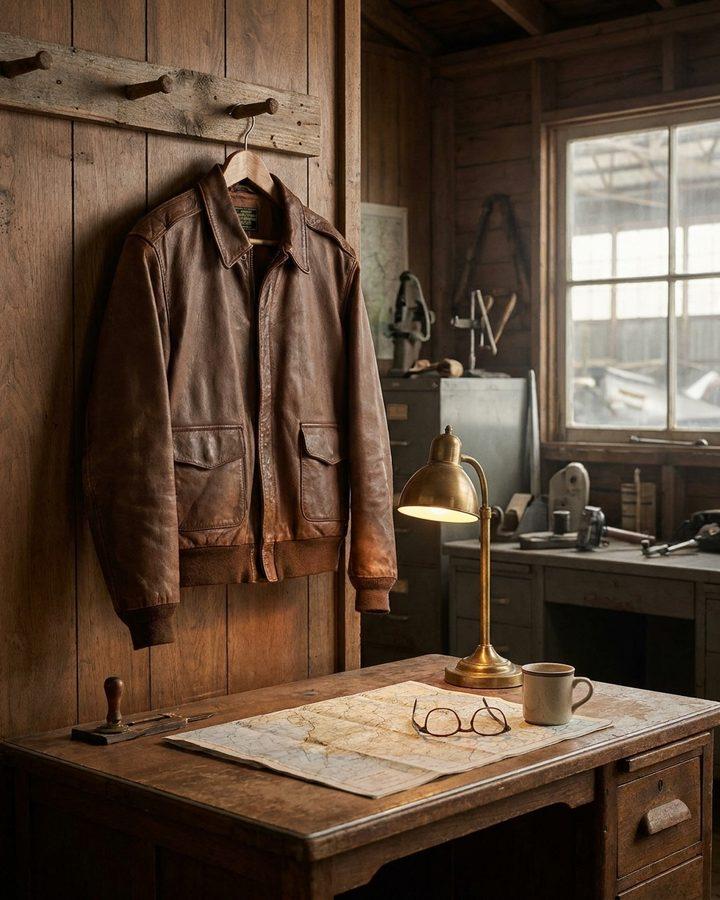
Choosing your hide
Horsehide, goatskin or cowhide?
Horsehide is heavy and creases boldly. Goatskin is lighter, with a pebbled grain that hides marks. Cowhide is even and tough.
Each product page lists the hide and lining. Order a standard size, or made to measure.
Leather careGuides for this style
- Aviation Outfit Guide: How to Dress Like a 1940s Aviator
- What Is a Blood Chit? The Story Behind the Flag Inside the Flight Jacket
- How to Break In and Soften a New Leather Jacket
- Leather Jacket Patina: How a Flight Jacket Ages and How to Encourage It
- A-2 vs G-1: Which Classic Leather Flight Jacket Is Right for You?
- The A-2 Flight Jacket: History and How to Spot a Good Reproduction
- What Is Full-Grain Leather? Grades Explained for Jacket Buyers
- Horsehide vs Cowhide vs Goatskin vs Lambskin: Which Leather for a Flight Jacket?
- How to Condition a Leather Jacket, and How Often
- How to Wear a Leather Flight Jacket Without Looking Like a Costume
Read the full guide
The A-2 is the original leather flight jacket. It has a snap-down shirt collar, knit cuffs and waistband, and two flapped front pockets. Our A-2 flight jackets come in horsehide, goatskin and cowhide. Each one is made to order: the product page lists the leather and lining options, and you pick a standard size from the size guide or choose Made to measure and enter your own measurements.
Origin
US Army Air Corps, adopted in 1931 for pilots and aircrew.
Leather
Traditionally seal-brown horsehide; goatskin and cowhide followed.
Warmth
Light to mid-weight. Best from cool autumn days to mild winter, layered.
Best for
Everyday wear that ages beautifully, and anyone who wants the classic flight jacket.
How to choose your A-2 flight jacket
1. Pick the leather
The hide sets how the jacket feels on day one and how it looks in ten years. Leathers vary by tannery and finish, so treat this as a guide and check each product's description.
| Leather | Feel when new | Break-in | How it ages | Choose it if… |
|---|---|---|---|---|
| Horsehide | Firm, substantial | Slowest; softens over months of wear | Bold creasing and a deep patina | You want the most traditional A-2 and don't mind breaking it in |
| Goatskin | Supple, pebbled grain | Quick | Grain stays visible; scuffs blend in | You want comfort from the first wear and a lighter jacket |
| Cowhide | Even, smooth | Moderate | Consistent, gradual patina | You want durability and a clean, uniform look |
2. Get the fit right
An A-2 is cut short and close. The waistband should sit at or just above your belt, and the shoulders shouldn't hang past your own. Sleeves often run slightly long so they don't ride up when your arms are forward. That's normal, and the knit cuffs gather the extra.
- Measure your body, not a jacket. The size guide uses body measurements, so measure your chest over a T-shirt and pick the matching size. Your body chest and a jacket's flat chest are not the same number.
- Layering: if you'll wear a sweater or hoodie underneath, go one size up, or choose Made to measure and select the Room for layers fit.
- Long torso or long arms? Choose Made to measure and enter your own sleeve and back length (see how made to measure works), or browse our Long & Tall collection.
- Leather doesn't stretch much. It moulds to you over time, but a jacket that's tight across the back on day one will stay tight.
3. A-2, G-1 or B-3?
All three are classic leather flight jackets, built for different jobs:
- A-2: shirt collar, close fit, the most versatile for everyday wear.
- G-1 flight jacket: the naval version, with a fur collar and a bi-swing back that allows more movement.
- B-3 shearling jacket: heavy sheepskin with the wool inside, for real cold.
A short history of the A-2
The US Army Air Corps approved the Type A-2 jacket in May 1931 under specification 94-3040. The original was seal-brown horsehide with a silk lining (Air & Space Forces Magazine). Wartime demand later brought cowhide and goatskin versions. The jacket became the badge of WWII bomber and fighter crews, who often personalised it with painted art and squadron patches. Production ended during the war, and the A-2 returned to US Air Force aircrew in the late 1980s (Wikipedia).
Our A-2s follow that pattern: collar, cuffs, pockets and proportions. Each product page states the leather, lining and hardware of that jacket.
Caring for a leather A-2
- Hang it on a wide, shaped hanger, away from radiators and direct sun.
- If it gets wet, let it dry slowly at room temperature, never with heat.
- Condition it every 3–6 months with regular wear. Patch-test first, because conditioners can darken leather. See our leather care range.
A-2 flight jacket FAQ
Does an A-2 run small?
The A-2 is a short, close-fitting pattern, so it can feel smaller than a modern bomber of the same size. Pick your size from the body-measurement size guide rather than your usual label, and allow room for whatever you'll wear underneath, or choose Made to measure with the Room for layers fit.
Is an A-2 warm enough for winter?
Over a sweater, an A-2 is comfortable down to roughly freezing in dry weather. That's guidance, not a rating. For colder days, a shearling B-3 is the warmer choice.
Horsehide or goatskin: which is better?
Neither is simply better. Horsehide is firmer and ages with bolder character. Goatskin is softer from day one and lighter to wear. Choose by the feel and look you want.
Can I add patches to my A-2?
Yes. Have patches sewn on by hand or by a leather specialist. Never iron patches onto leather. See patches & pins.