
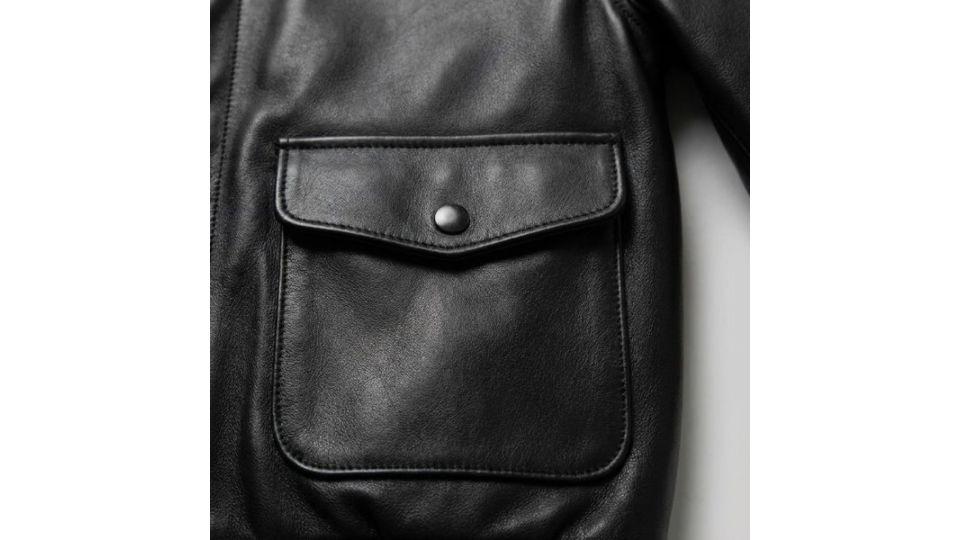
To tell real leather from fake, combine several checks rather than trusting one: look at a cut edge for fibers rather than a fabric backing, look for irregular pores and natural marks rather than a repeating pattern, notice how the surface wrinkles when you press it, smell it, check the reverse side, and read the label wording carefully. Real leather has a fibrous, suede-like back and creases in fine, irregular lines; synthetic leather usually shows a woven or knit fabric base and a too-perfect surface.
The catch is that modern synthetics are good, and some real leathers are coated so heavily they behave like plastic. That is why each check below comes with what it can and cannot prove.
Know what you are comparing
- Real leather: tanned animal hide. Ranges from full-grain to split leather. Our guide to what full-grain leather is explains the grades.
- PU (polyurethane) leather: a plastic coating on a fabric backing. Softer and more breathable than vinyl. Also sold as faux, vegan or leatherette.
- PVC (vinyl): a stiffer plastic coating, often shinier and less breathable.
- Coated split or bicast: real leather from the lower layer of the hide, covered in a thick polyurethane layer. It is technically leather but often looks and wears more like PU.
- Bonded leather: ground leather scraps bound with adhesive and surfaced. Rare in jackets.
The seven-check field test
| Check | What to look for | What it proves | What it does not prove |
|---|---|---|---|
| 1. Edges | Look at a raw edge inside a pocket, at a seam allowance or along a strap. Real leather shows a dense, fibrous cross-section. Fake leather shows a thin plastic layer on fabric. | Strong evidence. A woven or knit base means synthetic. | A coated split also shows fibers, so fibers alone do not prove good leather. Many jackets have folded or bound edges you cannot see. |
| 2. Pores and grain | Irregular pores, small scars, variations between panels. Synthetic grain is usually a uniform repeating pattern. | Natural variation strongly suggests full-grain or lightly finished leather. | Corrected and embossed leather is real but also looks uniform. Some synthetics now print in randomized patterns. |
| 3. Smell | Real leather smells rich and slightly earthy. Synthetics smell of plastic or chemicals. | A strong natural smell is a good sign. | Heavily finished real leather can smell faint or chemical; fresh synthetics may be scented. Weak evidence on its own. |
| 4. The back side | On an unlined area, real leather's reverse is suede-like and fibrous. Synthetics show fabric. | Strong evidence when you can see it. | Most jackets are fully lined, so you may not be able to check. |
| 5. Creasing under pressure | Press a thumb into the surface or gently fold a hidden area. Real leather wrinkles in fine, irregular lines and recovers slowly. | Natural creasing suggests leather with an intact or lightly finished grain. | Thick coatings make real leather crease like plastic; soft PU can look surprisingly natural. |
| 6. Label wording | Specific terms: full-grain, top-grain, cowhide, lambskin, goatskin, horsehide. Synthetic terms: PU, PVC, faux, vegan, leatherette, man-made materials. | Specific hide and grade terms are a commitment from the seller. | Genuine leather or real leather alone says little about grade. Labels can be wrong on unbranded goods. |
| 7. Price | A full leather jacket is costly to make: hides, waste in cutting, skilled sewing. | A very low price for a full leather jacket is a red flag. | A high price does not prove leather. Fashion brands charge premium prices for synthetics too. |
Three or more checks pointing the same way is a reasonable answer for most purchases. If edges and backing are both hidden, rely more on grain, creasing and the seller's specific wording.
Tests to skip
- The burn test: often recommended, but holding a flame to a jacket damages it, finishes can confuse the result, and it is a fire risk. Do not do it.
- The water drop test as proof: water soaks into aniline leather but beads on pigmented leather and on synthetics alike. It tells you about the finish, not whether it is leather.
- Warmth to the touch: real leather tends to warm to your hand, but so do many PU fabrics. Too subjective to settle anything.
What the label is allowed to say
In the US, the Federal Trade Commission's Leather Guides say imitation leather should be disclosed, using terms such as vinyl, plastic or imitation leather, and that ground or bonded leather should not be passed off as leather. Those guides are written for items such as bags, wallets, belts and footwear; jackets are not on the list, though general advertising rules still apply. For jackets, a specific hide and grade on the label or product page is the most useful commitment a seller can make.
Buying online: what to ask for
- The animal (cowhide, horsehide, goatskin, lambskin) and the grade (full-grain, top-grain, split).
- The finish (aniline, semi-aniline, pigmented).
- Close-up photos of the surface in daylight and of an inside seam or pocket edge.
- Lining material and whether any trims are synthetic.
On our leather jackets pages, check the product details for hide and finish, and use the size guide before you order.
Real leather vs faux: which should you buy?
Real leather lasts longer, breathes better, can be repaired and develops patina; it costs more and needs occasional care. Good PU is lighter, cheaper, easier to clean and animal-free, but it does not breathe as well and tends to peel or crack after a few years rather than age. If you are deciding between a smooth leather and a napped one, see suede vs leather.
FAQ
Is PU leather real leather?
No. PU leather is a polyurethane coating on a fabric base. The exception is coated split, sometimes sold as PU leather or bicast, which has a real leather base under a thick plastic coat.
Does real leather peel?
Full-grain and lightly finished leather do not peel. Peeling usually means a plastic coating is separating, either on PU or on a coated split.
Can I tell real leather from photos alone?
Sometimes. Close-ups of the surface and an inside edge help a lot. Without them, rely on the seller's specific wording about hide and grade.
Sources
US labeling guidance comes from the FTC's Guides for Select Leather and Imitation Leather Products, 16 CFR 24.2, with the product scope in 16 CFR 24.0.


