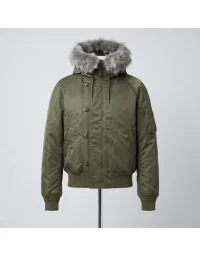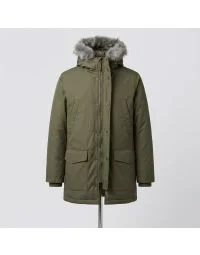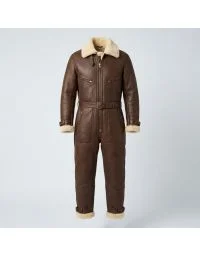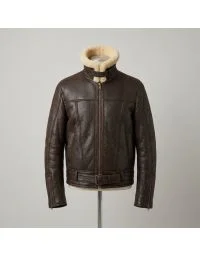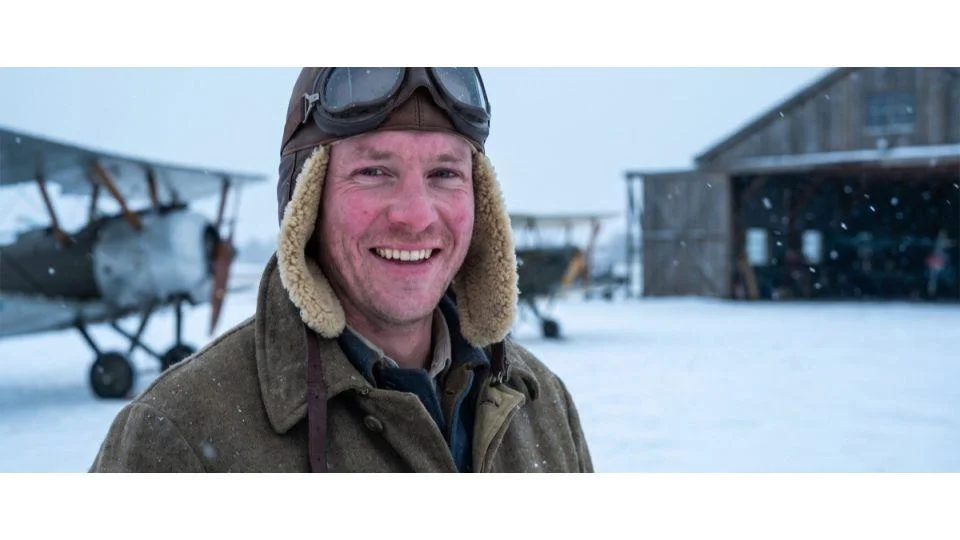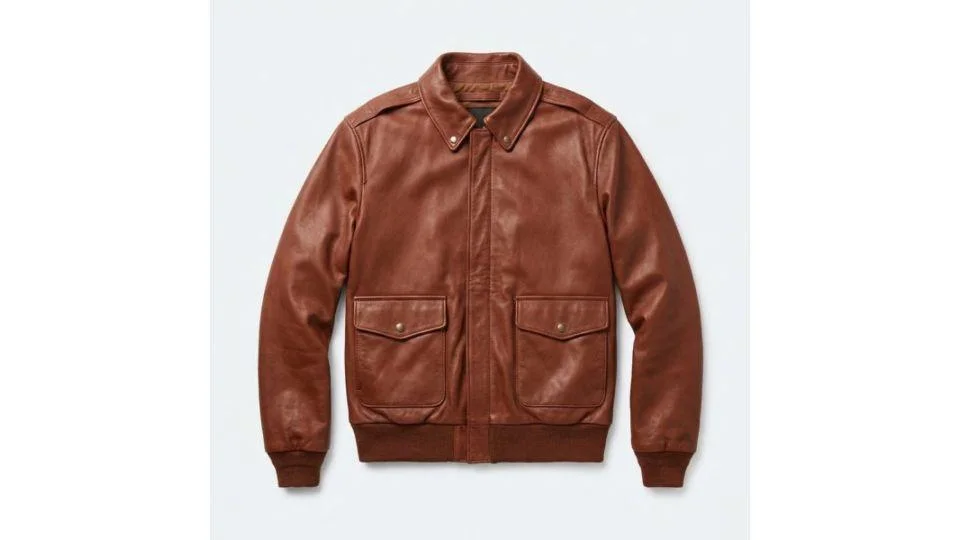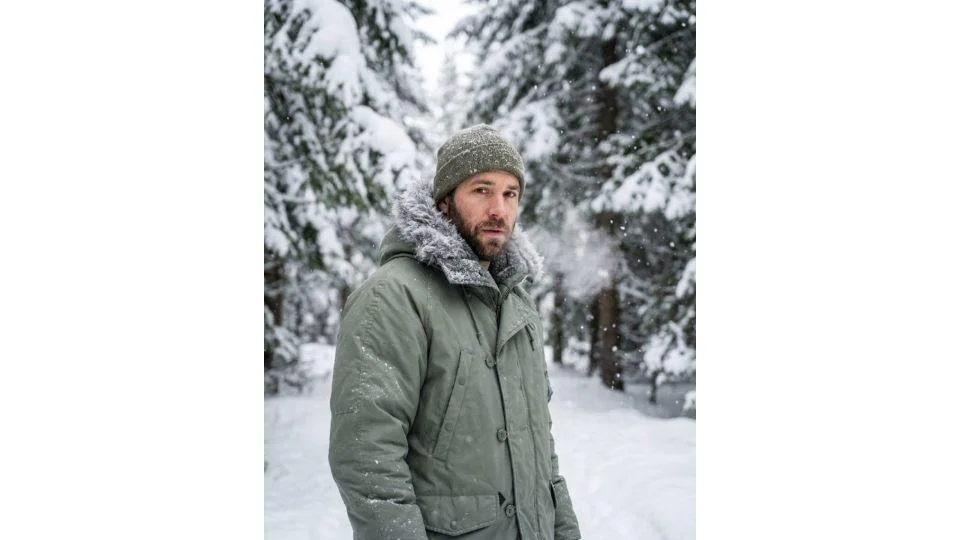
For deep, dry cold, the warmest jacket of military design is a long hooded parka such as the N-3B, because it covers your hips, seals your face with a fur-trimmed hood and keeps a thick layer of insulation around your core. A sheepskin B-3 is the warmest short jacket and the best at blocking wind, but it leaves your legs and head to fend for themselves. Nylon flight jackets like the B-15 and MA-1 are intermediate and light-cold layers, not extreme-cold coats.
Which one is warmest for you depends less on the label and more on how you use it: walking or standing, dry or wet, city or open country.
How military cold-weather jackets were organized
Mid-century American flight clothing was designed for specific jobs. In the open, unheated bombers of World War II, crews met air far below freezing at altitude, which is why bulky sheepskin jackets and trousers like the B-3 existed at all. After the war, lighter nylon jackets with synthetic insulation took over in heated jet cockpits, and long hooded parkas such as the N-3B were made for crews working in very cold climates on the ground.
Collectors and makers still group these garments informally into light, intermediate and extreme (often called heavy) cold. That is a useful way to shop, as long as you remember the original jackets were part of a system with insulated trousers, boots, gloves and headgear, and were used in short, active bursts.
The warmth-zone chooser
All temperature figures below are guidance, not a rating. They assume a sensible base layer and sweater underneath, moderate wind and normal activity. Standing still, wet weather or strong wind will push you toward the next zone up.
| Zone | Rough range (guidance) | Military-style jackets that fit | Honest limits |
|---|---|---|---|
| Light cold | About 40–60°F | MA-1 bomber, M-65 field jacket without liner, unlined leather A-2 or G-1 | Short hems; little insulation; needs a sweater below about 50°F |
| Intermediate cold | About 20–45°F | B-15, N-2B short parka, M-65 with liner, quilted leather bomber | Hip length or shorter; nylon shells are noisy and not flame resistant; hood only on the N-2B |
| Extreme cold | Below about 20°F | N-3B long parka, sheepskin B-3 | Bulky and heavy; the B-3 is short and dislikes rain; the N-3B can feel overheated indoors or on a brisk walk |
The contenders, one by one
N-3B parka: best all-round coverage
The N-3B is the long version of the Air Force cold-weather parka, ending below the hips, with a hood trimmed in fur or faux fur that can be zipped forward into a tunnel, giving the snorkel nickname. Its warmth comes from coverage: hips, neck and face are all sealed, so heat does not escape at the edges. It is the one to choose for sustained cold, school runs, games and anything that involves standing around.
Limits: the nylon or cotton-blend shell is wind-resistant rather than waterproof, and a heavy parka is too warm for a heated car or a fast walk above freezing. If you want to compare it with its shorter sibling, see N-3B vs N-2B parka. You can browse long and short hooded styles in our parkas collection.
Sheepskin B-3: warmest short jacket, best windbreak
A B-3 is made from sheepskin with the wool left on, worn wool side in. Leather and insulation are one piece, so wind cannot reach the pile, and the large shearling collar turns up and straps closed around the neck. For a dry, windy, very cold day it is hard to beat for its length.
Limits: it stops at the waist, it is heavy, and suede-faced sheepskin dislikes rain and slush. Pair it with warm trousers and a hat. Its story, from high-altitude bomber crews to modern wear, is told in our B-3 bomber jacket history, and you can compare constructions in our shearling and B-3 jackets.
B-15: the intermediate classic
The B-15 was a 1940s intermediate flight jacket, later made in nylon, with a fur or mouton-style collar and insulated body. It sits between a light bomber and a parka: warm enough for a crisp commute, light enough to wear all day. Explore modern versions in our B-15 jackets.
Limits: hip-length with a knit waistband, no hood, and a nylon shell. Nylon is not flame resistant; keep it away from open flames and stoves.
MA-1 and M-65: layering pieces, not cold-weather coats
The MA-1 is a lightly insulated nylon bomber. It is perfect for the shoulder seasons and for layering over a heavy knit, but on its own it is a light-zone jacket. The M-65 field jacket becomes an intermediate jacket once you button in a liner, which is why it is so versatile.
Leather flight jackets
Unlined A-2 and G-1 jackets are wind-stoppers with little insulation. They earn their place in the light zone and stretch further with layers; we cover that in detail in is a leather jacket warm enough for winter.
Matching the jacket to how you actually spend cold days
| Your situation | Best fit | Why |
|---|---|---|
| Standing still for long periods (games, bus stops, dog walks) | N-3B parka | Coverage of hips and face matters most when you are not generating heat |
| Short, windy walks between car and building | B-3 or B-15 | Wind blocking and a sealed collar; easy to take off indoors |
| Active outdoor work (shoveling, chores) | B-15 or M-65 with liner | Less bulk, easier movement, lower risk of sweating through layers |
| Wet snow and sleet | Parka with a water-resistant shell | Suede and smooth leather soak and stain in slush |
| Driving most of the day | N-2B or B-15 | Long parkas bunch behind the wheel; short jackets sit cleanly |
Layering: where the real warmth comes from
Even the warmest shell works better as part of a system:
- Base: merino or other wool next to the skin holds warmth when you sweat a little.
- Mid: a wool sweater or fleece adds most of the insulation and is easy to remove indoors.
- Shell: the jacket blocks wind and holds the warm air in.
- Edges: hat, gloves and a scarf or neck gaiter. With short jackets, insulated trousers or long underwear make a bigger difference than a heavier jacket.
Size with this in mind. A parka or shearling jacket that only fits over a T-shirt will compress your layers and feel colder. Measure over your winter mid-layer and use the size guide. You can also choose Made to measure on the product page and select the Room for layers fit if you want room for layers without excess length; see how made to measure works.
FAQ
Is a B-3 warmer than an N-3B?
Around the torso, sheepskin is typically warmer and more windproof. Overall, the N-3B usually keeps you warmer in sustained cold because it covers the hips and head. Pick the B-3 for short, windy, dry outings and the N-3B for long exposure.
Are military-style parkas waterproof?
Usually not. Most use water-resistant nylon or cotton-blend shells. In steady rain or wet snow, add a waterproof layer or choose a dedicated rain shell.
Can I use these jackets for winter sports or expeditions?
These are heritage and everyday jackets. For mountaineering, polar travel or emergency work, use technical gear rated for those conditions.
Sources
Flight jacket types and the cold of high-altitude bomber operations: Flight jacket (Wikipedia). M-65 liner and layering design: M-1965 field jacket (Wikipedia). N-3B background from a long-time maker: Alpha Industries, A complete history of the parka.