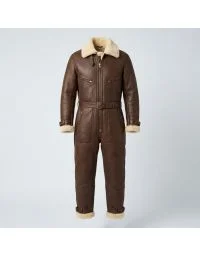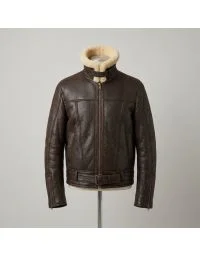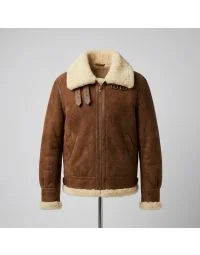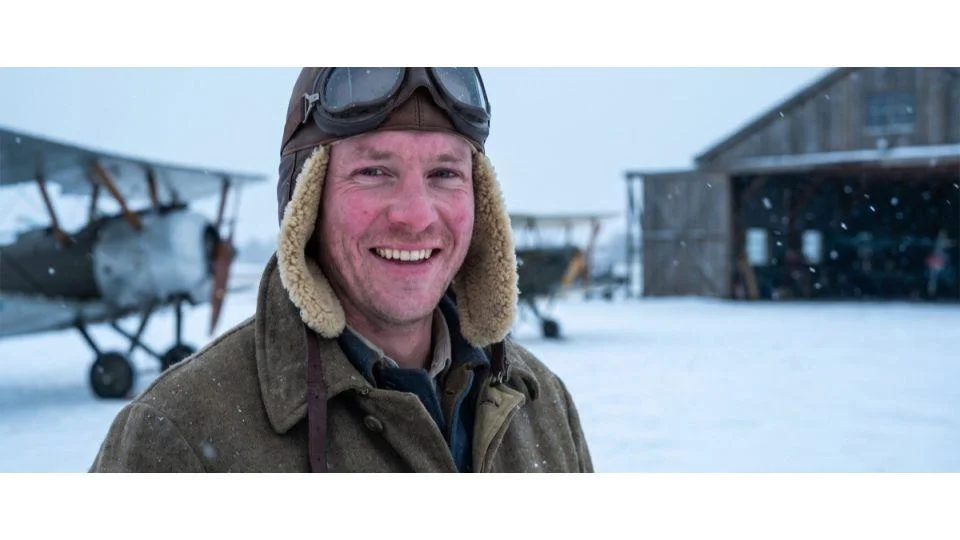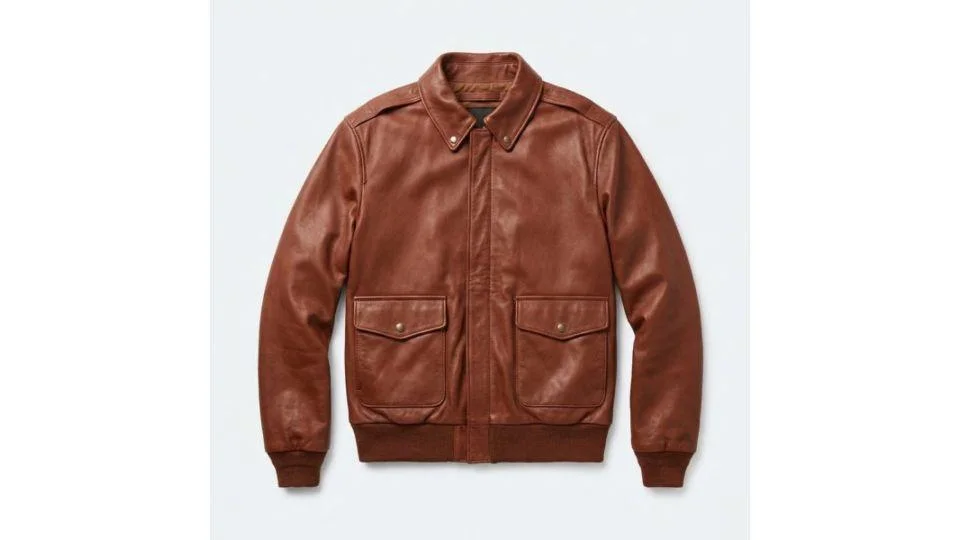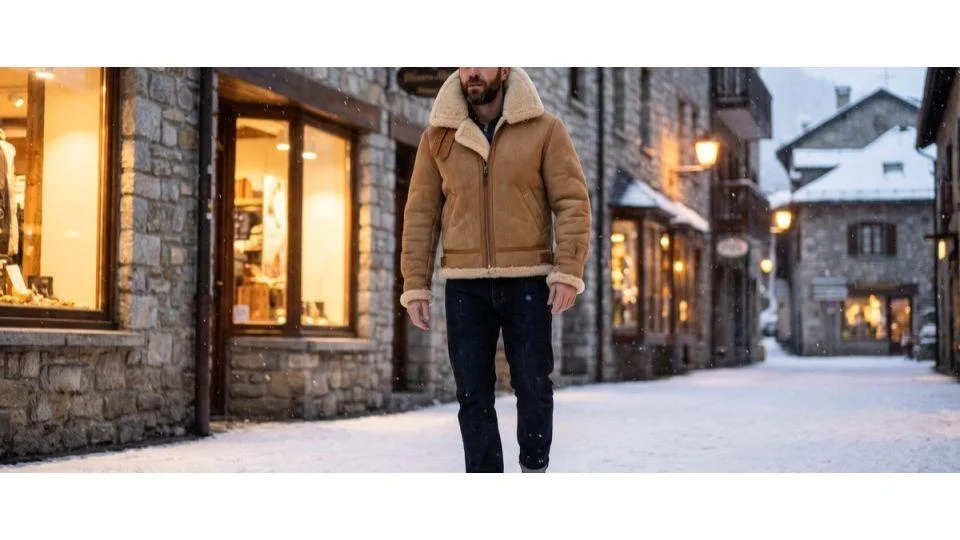
The B-3 is a waist-length sheepskin flying jacket, leather outside and thick shearling wool inside, issued by the US Army Air Corps on May 8, 1934 for open-cockpit and high-altitude flying. It stayed in service through World War II and became the jacket most associated with bomber crews, who flew for hours in unpressurized, unheated aircraft where temperatures could fall to around 50 degrees below zero Fahrenheit. Almost every feature on a B-3 is there to fight that cold.
The problem: cold you cannot escape
Before pressurized cabins, the air inside a bomber was the air outside it. As aircraft climbed above 20,000 feet, the temperature fell far below freezing, and waist gunners stood at open windows with the slipstream pouring past. The National Museum of the US Air Force notes that temperatures as low as minus 50°F made frostbite a constant danger and that early bomber crewmen relied on thick sheep shearling clothing.
Three facts shaped the answer:
- Sheepskin traps air. The dense wool on a shearling hide holds a layer of still, warm air against the body while the leather side blocks wind.
- Crews could not move around to keep warm. Gunners, radio operators and navigators sat or knelt at fixed stations for hours, so the clothing had to do all the work.
- Stations were cramped. A long coat was impossible in a turret or at a radio desk, so the jacket had to stay short and pair with matching shearling trousers.
How altitude shaped the B-3's design
Read the jacket from collar to hem and the logic is clear.
- Tall shearling collar with straps. The collar stands up around the neck and buckles shut with leather straps, sealing the gap where wind would otherwise get in. The Smithsonian's B-3 has buckles at both the collar and the waist.
- Shearling everywhere. The body, sleeves and collar are all lined with wool, not just the torso.
- Treated outer hide. According to the Smithsonian record, the outer leather was treated to resist water, gasoline, oil and dirt, all of which were constant in an aircraft.
- Waist strap instead of knit. A leather strap and buckle at the hem cinch the jacket closed; knit ribbing would have let wind through and frozen when damp.
- Short length. The hem stops at the waist so crews could sit, kneel and climb through hatches, with shearling trousers covering the rest.
- Zip front with patch pockets. A full metal zip allowed quick dressing, with simple lower patch pockets.
Its limits
The B-3 was warm but heavy and bulky. In the tightest positions, such as ball turrets, every inch mattered. Leather and sheepskin were also costly materials in wartime quantities. During the war the Army Air Forces developed lighter fabric flying clothing and electrically heated suits. Even so, the B-3 stayed in use throughout World War II.
Original B-3 vs modern shearling jackets
Today's B-3 style jackets keep the look, but they are built for city streets, not bomb bays. Use this comparison to understand what you are buying.
| Feature | Original B-3 (1930s–1940s) | Typical modern B-3 style | What it means for you |
|---|---|---|---|
| Hide | Shearling sheepskin; the Smithsonian example lists horse, cow and lamb hides in its outer | Sheepskin shearling, sometimes leather with a faux shearling lining | Real shearling breathes and insulates better; faux linings are lighter and cheaper |
| Weight | Very heavy | Usually lighter thanks to thinner hides | Easier to wear on public transport and in cars |
| Finish | Treated against water and fuel, often heavily worn-looking | Smooth or distressed finishes for style | Few modern finishes are truly waterproof; avoid soaking |
| Collar and straps | Functional buckles to seal the neck | Straps kept, often partly decorative | Still useful on windy days |
| Fit | Cut roomy for layers and flying clothing | Closer, more tailored fits available | Size for a sweater, not for a stack of layers |
| Warmth (guidance, not a rating) | Built for extreme cold at altitude | Very warm for everyday winter use | Can be too hot indoors or in mild climates |
Who should own a B-3 today
- People who face genuinely cold winters and wait outdoors: commuters, dog walkers, spectators at outdoor events.
- Anyone who wants the most dramatic of the classic flight jackets.
- Not ideal for: mild climates, heavily heated offices or people who drive everywhere, because a B-3 can become uncomfortably warm.
If you are weighing up materials, our guide to shearling vs sheepskin explains the terms, and our roundup of the warmest military-style winter jackets compares the B-3 with parkas and other cold-weather options. Browse our shearling B-3 jackets to see military-pattern versions with the collar straps and waist buckle; each product page states whether the lining is genuine shearling.
B-3 care in brief
Shearling dislikes heat and soaking. Let a wet jacket dry slowly at room temperature, brush the wool gently and store it on a broad hanger with breathing space. Spot test any product on a hidden area, follow the care label, and send valuable or vintage pieces to a professional leather and shearling cleaner.
B-3 jacket FAQ
When was the B-3 introduced?
The Smithsonian's National Air and Space Museum records that the US Army Air Corps issued the Type B-3 on May 8, 1934.
Is a B-3 the same as a shearling aviator jacket?
Most shearling aviator jackets follow either the American B-3 or the British RAF style, which usually has a different collar and sleeve construction. B-3 is the specific American pattern with collar straps and a waist buckle.
Is a B-3 too warm for everyday wear?
In mild climates it can be. It suits cold, dry winter days best; treat any temperature range you see as guidance, not a rating.
Sources
This article draws on the Smithsonian National Air and Space Museum record for a Type B-3 flying coat and the National Museum of the US Air Force Combat Box fact sheet.