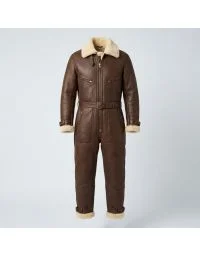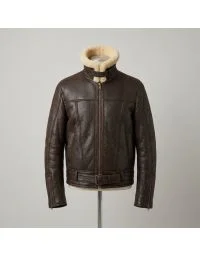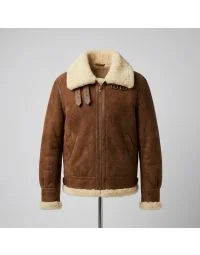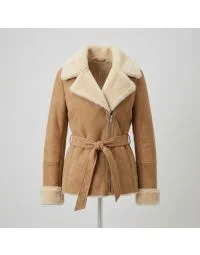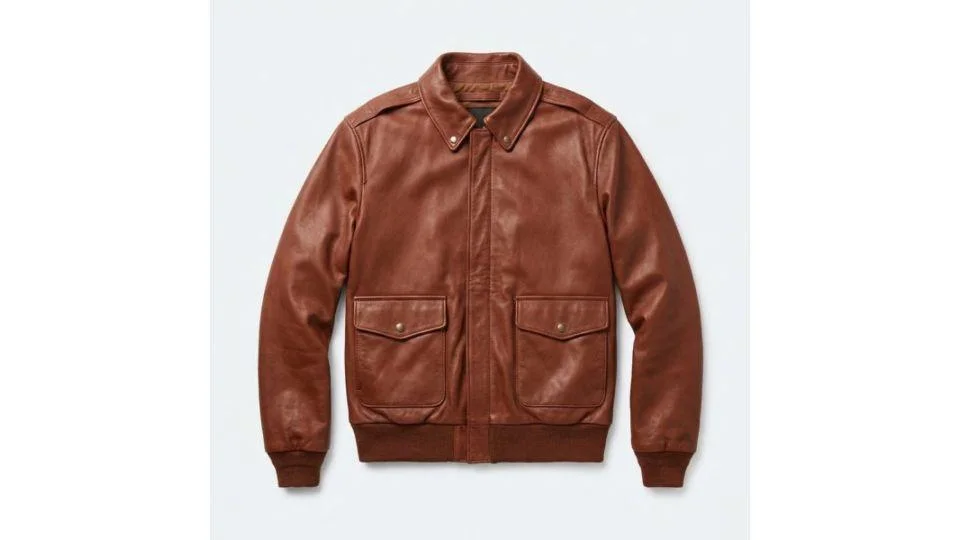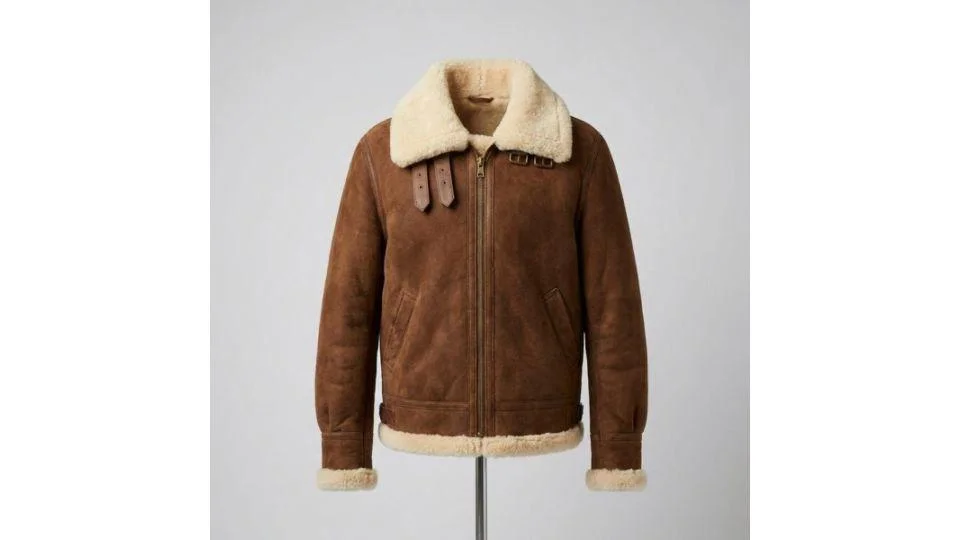
Shearling and sheepskin describe the same basic material: the skin of a sheep or lamb tanned with the wool still attached. Sheepskin is the broader word for that pelt. Shearling usually means a sheepskin or lambskin from a young or recently shorn animal, with the wool clipped to an even, fairly short length, made up into a garment with the suede or leather side out and the wool inside. So all shearling is sheepskin, but not every sheepskin is called shearling. Faux shearling, often sold as sherpa, is a synthetic pile fabric with no skin at all.
Why the words get confusing
In everyday shopping, "shearling jacket" and "sheepskin jacket" are used almost interchangeably for a coat that is leather or suede on the outside and woolly on the inside. The trade uses them a little more precisely, and marketing sometimes uses them loosely, for example calling a polyester-lined jacket "shearling style." Knowing the terms helps you read product descriptions and spot when "shearling" refers to a look rather than a material.
Terminology card
| Term | What it is | Real skin? | Where you see it |
|---|---|---|---|
| Sheepskin | Sheep or lamb pelt tanned with the wool on. Also used loosely for the leather alone. | Yes | Coats, slippers, rugs, seat covers |
| Shearling | Sheepskin or lambskin with the wool clipped to an even length; suede or leather face, wool pile inside | Yes | Flying jackets, coats, collars, boot linings |
| Lambskin (wool on) | Shearling from a lamb; finer, lighter, softer wool | Yes | Lighter coats and vests |
| Mouton | Sheepskin, usually lamb, with the wool straightened, chemically treated and heat-set, often dyed to resemble beaver or seal | Yes | Collars, vintage coats, hats |
| Sheepskin leather or nappa lamb (wool off) | Sheep or lamb leather with no wool | Yes | Fashion leather jackets, gloves |
| Sherpa | Synthetic (usually polyester) pile fabric made to look like fleece | No | Jacket linings, denim jackets, blankets |
| Faux shearling | Synthetic pile bonded to a faux suede or vinyl face | No | Lower-cost coats and collars |
A practical note on collars: a jacket can have a real shearling collar and a synthetic body lining, or the other way round. Read the composition for each part, not just the headline.
How to tell real shearling from faux
You can check most jackets in a minute with your hands and eyes. Use several of these together; one test alone can mislead.
- Part the pile. Push the wool apart down to the base. On real shearling you see wool growing out of skin, the back of the leather. On faux you see a woven or knitted fabric backing with fibres looped or glued into it.
- Check a cut edge. Look inside a pocket, at a cuff or along the front facing. Real shearling has a solid, slightly fibrous leather edge with no fraying. Faux shows fabric layers, a knit or a bonded film.
- Feel the face. Real suede-face shearling feels dry, matt and slightly tacky. Faux suede often has a faint sheen and a slippery, uniform feel.
- Feel the wool. Real wool is springy and a little crimped, with slight variation in fibre length and density. Synthetic pile is very uniform and can feel slick or squeaky.
- Weigh it. Real shearling is noticeably heavier and denser for the same jacket size.
- Check breathability. Hold the fabric to your mouth and breathe through it. Real skin lets a little air through; bonded faux layers often block it.
- Read the label. US leather labelling guides from the FTC say material that looks like leather but is not should be disclosed as non-leather. Look for words like "polyester," "acrylic," "simulated" or "faux."
Skip the burn test you may read about elsewhere. It damages the garment and is a fire risk.
Which is warmer?
Real shearling is warmer for its thickness because wool fibres trap air, handle moisture and keep insulating when a little damp, and the skin blocks wind. Faux shearling can feel cosy but tends to be less breathable, so you may get clammy indoors and cold outside. As guidance, not a rating: a heavy shearling flying jacket is built for real cold, while a sherpa-lined jacket suits cool, dry days.
Shearling in flying jackets
Sheepskin was the obvious material for open and unheated cockpits, where pilots and crews faced bitter cold at altitude. US Army Air Corps sheepskin flying jackets such as the B-3 appeared in the 1930s and became the heavy-weather jacket of early Second World War bomber crews. Our B-3 bomber jacket history tells that story. Today you can see the style in our shearling and B-3 jackets, and in lighter cuts among our women's sheepskin jackets and women's vests. Check each product page for the exact material of the face, wool and collar.
Caring for real shearling
Because it is two materials in one, real shearling needs care on both sides: a suede brush for the face and a wide-tooth comb for the wool, with no machine washing and no heat. Our step-by-step guide on how to clean a shearling jacket covers stains, soaking and what to leave to a specialist. Faux shearling is usually machine washable on a gentle cycle; follow its label.
FAQ
Is shearling the same as sheepskin?
Shearling is a type of sheepskin: a wool-on skin with the wool clipped to an even length. In everyday use the two words often mean the same garment.
Is sherpa real shearling?
No. Sherpa is a synthetic pile fabric, usually polyester, made to look like sheep's wool.
What is a mouton collar?
A collar made from mouton, which is sheepskin with the wool straightened and heat-set for a smooth, fur-like finish, often dyed brown.
Does real shearling shed?
A little loose wool when new is normal. Persistent shedding of clumps can mean damage or a lower-quality skin.
Sources
Definitions of shearling, sheepskin and sherpa: Shearling (Wikipedia) and Sheepskin (Wikipedia). Mouton processing description: FTC Fur Products Labeling Rules, 16 CFR 301.9. Disclosure of imitation leather: FTC Guides for Select Leather and Imitation Leather Products (16 CFR Part 24).