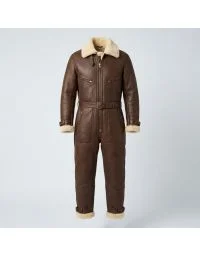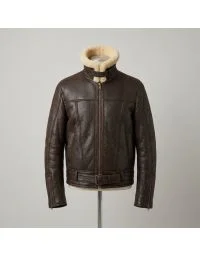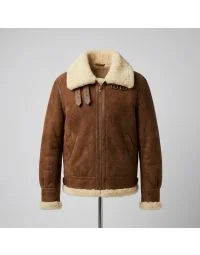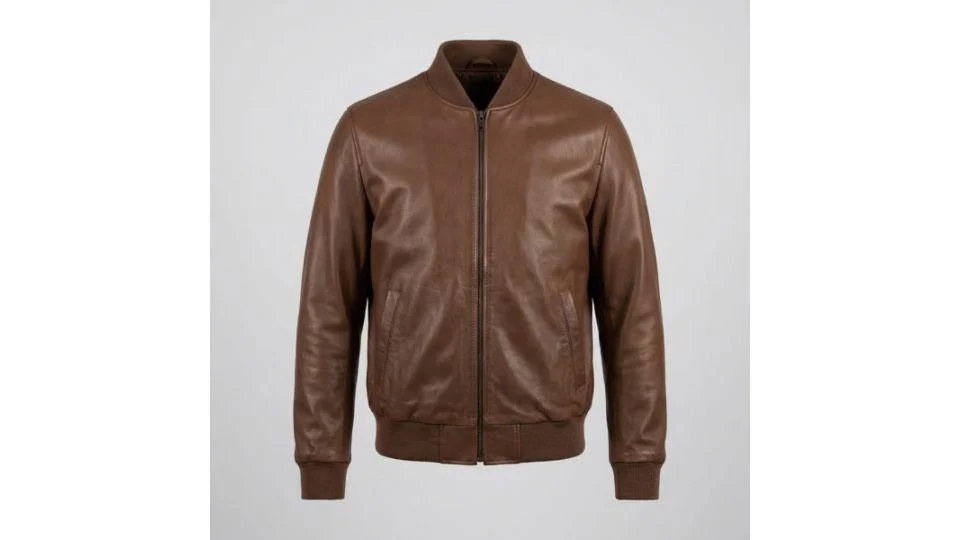
A leather jacket can be warm enough for winter, but the leather is rarely what keeps you warm. Leather is an excellent windbreak; the warmth comes from the lining and the layers you trap underneath. An unlined or cotton-lined flight jacket is a fall jacket that stretches into a mild winter with a sweater, while a shearling jacket such as a B-3 is a true cold-weather coat.
So the honest answer depends on three things: what the jacket is lined with, what you wear under it, and how long you will be standing still outside.
Why leather feels warm (and where it stops)
Smooth leather is a dense, tightly bound hide. Wind does not pass through it the way it passes through a knit or a loosely woven coat, so on a breezy 50°F day a leather jacket feels much warmer than a sweater of the same weight. That windproofing is its real strength.
What leather does not do well is insulate. Insulation comes from still air trapped in fibers: wool, fleece, down or the dense wool pile of sheepskin. A single layer of jacket leather traps almost none. That is why an unlined jacket feels great at first and then lets the cold seep in after twenty minutes at a bus stop.
Three other weak points matter in winter:
- Openings. A short jacket with a knit waistband leaves your lower back and neck exposed. Most heat loss in a short jacket happens at the collar and hem.
- Wet. Leather is water-resistant, not waterproof. Soaked leather loses its wind-blocking edge, stiffens and can water-mark. Snow and road salt are a care problem as much as a warmth problem.
- Cold leather is stiff. Below freezing, thicker hides feel rigid until your body heat warms them, which makes a snug fit feel tighter.
Temperature guidance by jacket type and layer
The table below is guidance, not a rating. It assumes dry weather, light wind and walking pace for about 20 to 40 minutes. People run warm or cold, wind and humidity change everything, and standing still at a game feels far colder than walking to work. Treat the ranges as a starting point and adjust with layers.
| Jacket | What you wear under it | Comfortable range (guidance, not a rating) |
|---|---|---|
| Unlined or cotton-lined leather jacket (A-2, G-1 style) | T-shirt | About 55–65°F |
| Unlined or cotton-lined leather jacket | Flannel shirt or light crew-neck sweater | About 45–55°F |
| Unlined or cotton-lined leather jacket | Thin merino base layer, wool sweater, scarf | About 35–45°F |
| Leather bomber with quilted or fleece lining | Shirt and medium sweater | About 30–45°F |
| Shearling jacket (B-3 style) | Shirt or light knit | About 20–35°F |
| Shearling jacket (B-3 style) | Base layer, wool sweater, hat and gloves | About 5–25°F for short outdoor spells |
Below the bottom of these ranges, or in wet snow and strong wind, a long insulated parka is the better tool. Our guide to the warmest winter jackets from military design compares shearling with parkas and nylon flight jackets.
Layering combinations that work
A leather jacket is easiest to winterize from the inside out. The rule is simple: put the insulation under the leather and let the leather stop the wind.
The commuter (about 35–50°F)
Fine merino or cotton base layer, an Oxford or flannel shirt, then a thin crew-neck or V-neck sweater. Add a wool scarf to close the collar gap. This keeps the jacket's lines clean, so you can still zip it.
The cold snap (about 25–40°F)
Base layer, a thicker shawl-collar or roll-neck sweater, scarf, knit hat and leather gloves. A roll neck does the scarf's job and looks deliberate under a flight-jacket collar. Wear it open over a heavy knit only if the jacket was sized with room; see the fit note below.
The lined-vest trick
A thin quilted or fleece vest under the jacket adds core warmth without bulky sleeves, which is where layered leather jackets usually bind first. It is the most efficient single upgrade for an unlined jacket.
The shearling route
If your winters regularly sit below freezing, stop fighting physics and choose sheepskin. A shearling collar seals the neck, and the wool pile traps far more air than any sweater. Browse our shearling and B-3 jackets to see the difference in construction.
Fit: leave room for winter
A jacket fitted closely over a T-shirt in a warm fitting room will not close over a sweater in January. If you plan to wear knitwear underneath, try the jacket on (or measure) over the thickest layer you expect to wear and check the size guide before choosing. Shoulders and sleeve length matter most: too-tight armholes are the first thing you feel when layering. You can also choose Made to measure on the product page, enter your measurements and select the Room for layers fit, which is useful if you want winter room without a boxy look; smooth-leather styles also offer a quilted winter lining. See how made to measure works.
For styling the result, our guide on how to wear a leather flight jacket without looking like a costume covers which knits and trousers suit each jacket type.
Protecting leather in snow, rain and salt
Winter is harder on the jacket than on you. A few habits help:
- Shake off snow before it melts into the hide, then let the jacket dry on a broad hanger at room temperature, away from radiators and hair dryers.
- Wipe road-salt spray promptly with a barely damp cloth; dried salt leaves white tide lines.
- Condition before and after the season with a product suited to your leather, always after a spot test in a hidden area, and follow the garment's care label.
- For valuable or vintage pieces, take salt stains or heavy water marks to a professional leather cleaner rather than experimenting.
If a jacket gets soaked, see what to do when a leather jacket gets wet.
FAQ
What temperature is too cold for a leather jacket?
For an unlined jacket with a sweater, most people start to feel underdressed somewhere around the mid-30s°F, sooner in wind. A shearling jacket extends that well below freezing. These are guidance figures, not ratings.
Is a leather jacket warmer than a wool coat?
In wind, a leather jacket often feels warmer. In still, cold air, a heavy wool overcoat usually insulates better and covers more of the body. Layered correctly, a leather jacket closes most of that gap.
Can I wear a leather jacket in the snow?
Yes, for short periods. Light dry snow brushes off; wet snow and slush soak in. Dry it slowly and condition it afterwards, and consider a long parka for heavy snowfall.
Which leather jacket is warmest?
Sheepskin shearling, where the leather and the wool pile are one piece, is the warmest leather option. Among smooth leather jackets, a heavier hide with a quilted lining and a fur or shearling collar beats an unlined one. Compare styles in our leather jacket collection.
Sources
Background on flight-jacket types and the cold conditions shearling jackets were designed for: Flight jacket (Wikipedia). Example of the cotton-lined A-2 type in a museum collection: National Museum of the US Air Force, A-2 Jacket with Art.