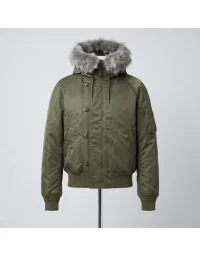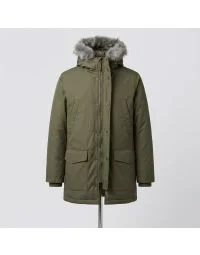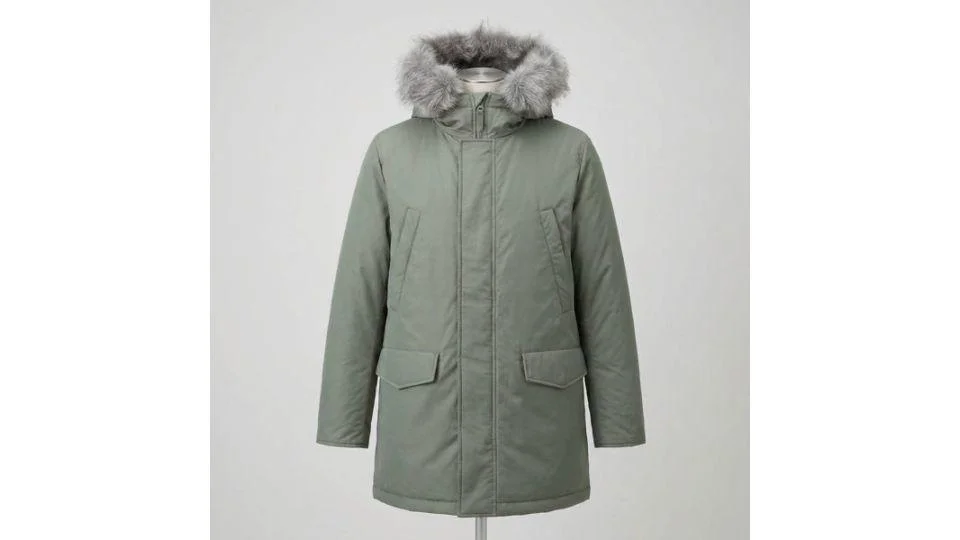
The N-3B and N-2B are both US Air Force cold-weather parkas with fur-trimmed hoods, but they differ in one decisive way: length. The N-3B falls to about three-quarter length and covers the hips and seat, while the N-2B stops around the hip so it does not bunch up when you sit. Choose the N-3B if you stand or walk in serious cold; choose the N-2B if you drive, cycle or spend a lot of time seated.
N-3B vs N-2B side by side
Warmth and temperature notes are guidance, not ratings; actual warmth depends on the fill, your layers, wind and activity.
| Feature | N-3B | N-2B |
|---|---|---|
| Length | About three-quarter length, covering hips and seat | Short, around hip length |
| Hood | Fixed, fur-trimmed hood that zips up into a tunnel (the snorkel) | Fur-trimmed hood, split on many patterns so it can unzip and lie flat |
| Closure | Zip front under a snap or button storm flap | Zip front, often with a storm flap |
| Mobility | Restricts long strides and sitting slightly; best on foot | Free movement when seated, driving or cycling |
| Warmth zone | Hard winters with wind; the longest coverage of the two | Cold days with shorter exposure; legs need their own layer |
| Original users | USAF and Navy flight and ground crews in extreme cold | USAF air and ground crews, especially those who worked seated |
| Best civilian use | Walking commutes, waiting outdoors, very cold cities | Car commutes, cycling, active winter days, shorter people |
Where the two parkas came from
Both parkas trace back to the cold-weather research of World War II. Alpha Industries, an early contractor, describes the line as beginning with the N-3 developed during the war, followed by the N-3A after the Air Force became a separate service and then the N-3B. Alpha says it received its N-3B contract in 1959 and began producing the N-2B for the Department of Defense in 1963.
The N-3B was made for flight and ground crews working in Arctic and subzero conditions, such as at northern bases where aircraft had to be serviced outdoors. Early versions used a nylon shell with heavy wool padding, later replaced by lighter synthetic fill. The N-2B was the short answer to a practical problem: a long parka bunches up in a cockpit or on a vehicle seat, so aircrew needed one that ended at the hip. Its pass-through front pockets let wearers reach trouser pockets without exposing their hands.
Why the N-3B is called a snorkel parka
Zip the N-3B's hood all the way up and it closes into a narrow tunnel around the face, leaving only a small opening. That breathing tube look gave it the nickname snorkel parka. The name can be confusing because it is also used for other hooded parkas, including the British-made and US M-1951 fishtail parkas famous in 1960s mod style. If a seller says snorkel parka, check whether they mean an N-3B pattern or a fishtail.
Which one to buy: a decision guide
- How long are you outside at a time? More than 30 minutes standing or walking in freezing wind points to the N-3B.
- Do you sit a lot in your coat? Drivers and cyclists usually prefer the N-2B; a long parka rides up and creases.
- How tall are you? On shorter people the N-3B can reach the knee, which looks heavy and limits stride. Check your height and back length against the size guide, or choose Made to measure so the parka is made to your height and back length; see how made to measure works.
- What do you wear underneath? Both are cut to go over a sweater or fleece. Size for your heaviest normal layer, not your thinnest.
- How cold does it really get? In mild winters either parka can be too warm. In that case, a field jacket with a liner may serve you better; see M-65 vs M-51 field jacket.
Fit and layering tips
- Shoulders should fit with a sweater on, without the sleeves pulling when you reach forward.
- Sleeves should cover the wrist when your arms are extended; knit inner cuffs help seal the gap with gloves.
- Do the zip up fully when trying it on. If the hood presses on your forehead, size up or choose a pattern with an adjustable hood.
- Keep the fur ruff dry and brush it gently. Follow the care label, spot test any cleaner, and send genuine-fur trims to a professional cleaner when in doubt.
For other cold-weather options, our guide to the warmest military-style winter jackets compares parkas with shearling and field jackets. Browse our military-pattern parkas to see N-3B and N-2B style options; each product page lists the shell fabric and lining.
How they compare with a civilian down parka
Military-pattern parkas usually use synthetic fill and a tough nylon or nylon-cotton shell. That makes them heavier than a technical down parka of similar warmth, but more forgiving in wet snow and rough use, since synthetic fill keeps more of its loft when damp. If you want the lightest possible coat for dry, extreme cold, a down parka wins; if you want a hard-wearing everyday winter coat with a classic look, the N-3B and N-2B patterns earn their place.
N-3B vs N-2B FAQ
Is the N-3B warmer than the N-2B?
Usually, because it covers more of your body. If the fill is similar, the extra length makes the bigger difference. That is guidance, not a rating.
Is the fur on the hood real?
Early military versions used real fur; most modern parkas use synthetic fur. Check the product page for the material.
Can I wear an N-2B over a suit?
It works over a sport coat if you size for it, but the hem will sit above a suit jacket's hem. An N-3B covers a blazer more neatly.
Sources
Development and contract dates come from Alpha Industries: Ways to wear the N-3B, a manufacturer account that should be read as such.