A tanker jacket is the nickname for the U.S. Army's Jacket, Combat, Winter, introduced in 1941 for crews of tanks and other armored vehicles. It is a short olive drab cotton jacket with a blanket-wool lining, a front zip, and knitted wool collar, cuffs and waistband. Unlike a leather flight jacket, it was designed to keep a crewman warm in a cramped, unheated steel hull while leaving nothing loose to snag on hatches and controls.
Soldiers outside the tank corps quickly saw its merits, and it became one of the most coveted American garments of the war. Today the name "tanker jacket" is used loosely for any short, knit-trimmed military-pattern jacket, which is why it is worth knowing what made the original different.
Why armored crews needed their own jacket
Early-war tanks offered almost no comfort. Engines were behind a firewall, hulls were steel, and there was no cabin heating. Crews sat for hours in a space that could feel colder than the air outside, then had to climb out through narrow hatches in a hurry. A long greatcoat tangled on everything. Leather was costly and needed for aircrew. Bulky pockets and flaps caught on hatch rims and turret fittings.
The Army's answer, standardized around 1941, was a winter combat uniform: the jacket, a pair of matching bib overalls, and a knitted winter helmet worn under the crash helmet. The jacket was cut short so it did not bunch when a crewman sat, used knit at the openings to seal out drafts, and kept its outline as smooth as possible.
The first contracts had patch pockets on the front. In late 1941 the Army decided slash pockets set into the front were better, and a revised specification followed in 1942. Collectors call these the first and second patterns. Exact contract dates vary between references, so treat these as approximate.
Tanker vs A-2 vs field jacket
All three are short American military jackets from the same years, and all three are often lumped together as "bombers". They were built for very different jobs. This comparison shows how the job shaped each design.
| Feature | Tanker (Winter Combat Jacket) | A-2 flight jacket | M-1943 field jacket |
|---|---|---|---|
| Built for | Crews in unheated armored vehicles | Army Air Forces aircrew | Infantry and general troops |
| Shell | Cotton twill or poplin, water-repellent finish | Horsehide or goatskin leather | Windproof cotton sateen |
| Lining | Blanket wool | Thin silk or cotton lining, no insulation | Unlined; worn over a pile liner or sweater |
| Collar, cuffs, waist | Knitted wool at all three | Shirt collar, knit cuffs and waistband | Fabric collar, adjustable cuff tabs, drawcord |
| Length | Waist | Waist | Hip to upper thigh |
| Why that shape | Sit for hours, exit fast, nothing to snag | Fit in a cockpit, durable leather, wind protection | Layer for any weather, carry kit in large pockets |
The key difference from a flight jacket is the lining and fabric. The A-2 relied on tough leather and assumed the wearer would add heavier flying clothing above a few thousand feet. The tanker jacket used cotton and wool because it had to be warm on its own, cheap enough to issue widely, and tolerant of grease and mud. For the full story of leather flying clothing, see our history of the flight jacket.
Different jobs, different jackets
The tanker jacket makes more sense when you compare the conditions each group faced.
- Tank crews sat still in cold metal, so they needed insulation that worked without movement, plus a short cut that would not bunch or catch.
- Aircrew faced extreme cold at altitude, so their flight jackets were really outer shells, paired with sheepskin or electrically heated suits on long missions.
- Aircraft and deck ground crews worked outdoors in wind beside aircraft, often with their arms raised. The Navy's pile-lined deck jacket, covered in our article on the N-1 deck jacket, is a good example.
- Infantry marched and fought in every season, which pushed the Army toward the layered M-1943 system and later the M-51 and M-65 field jackets. Our M-65 vs M-51 comparison explains how that idea developed.
Who actually wore it
Although it was meant for armored units, the jacket was warm, comfortable and short enough for almost any job, so it spread well beyond tanks. Photographs show it on infantry officers, airborne troops and jeep drivers. Historical accounts also describe fighter pilots in Europe, especially those flying long, cold missions, choosing it over issue flight jackets. After the Army adopted the M-1943 field jacket, the tanker jacket was produced in smaller numbers, but surviving examples stayed in use through the end of the war.
What to look for in a modern tanker-style jacket
Many modern jackets borrow the look. These details tell you how closely a jacket follows the original pattern.
- Knit trim at collar, cuffs and waist. The defining feature. A full knit collar, rather than a fabric collar, is the giveaway.
- Slash or patch pockets. Slash pockets follow the more common second pattern; patch pockets follow the first.
- A wool or wool-blend lining. This provides most of the warmth. Quilted synthetic linings are lighter but feel different.
- A short, slightly full body. It should blouse a little over the waistband, with a pleated or bi-swing back for reach.
- Cotton shell. Twill or poplin in olive drab. Leather versions exist, but they are a fashion interpretation.
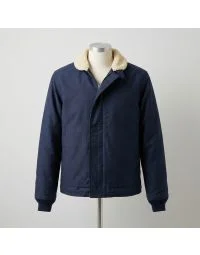
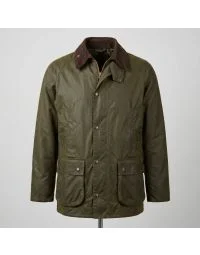
For fit, take your body measurements and compare them with our size guide, or choose Made to measure and enter them directly; knit waistbands are less forgiving than open hems. Browse our field jackets and parkas for military-pattern utility wear, or our deck and waxed cotton jackets if you want cotton workwear with a similar short line. Check each product page for the shell and lining materials.
Tanker jacket FAQ
Is a tanker jacket the same as a bomber jacket?
No. Both are short with knit trim, but a bomber descends from aircrew clothing, usually in leather or nylon. The tanker jacket is a cotton-and-wool Army garment for ground vehicles.
Is a tanker jacket warm?
As guidance, not a rating: the wool lining makes it comfortable in cool to cold weather with a sweater underneath. It is not a deep-winter parka.
Why is it called a tanker jacket?
It was issued to tank and armored crews, and the name stuck with soldiers and later with collectors. Its official name was the Jacket, Combat, Winter.
Sources
Pattern changes and materials were checked against collector and museum-shop references: The Tank Museum shop: US WW2 1st pattern tankers jacket and International Military Antiques: original WWII winter combat tanker jacket.