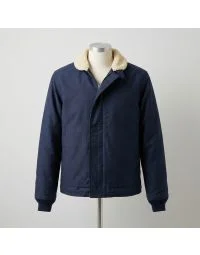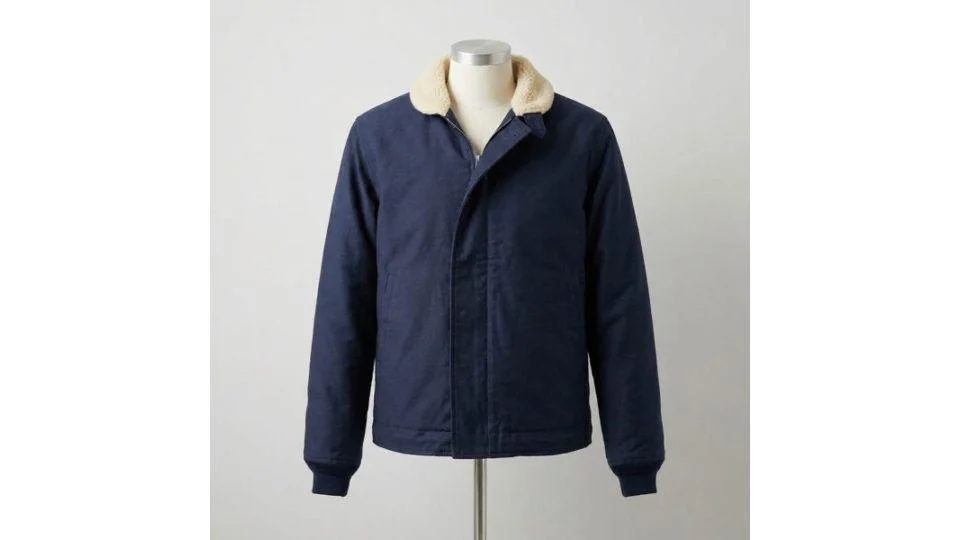
A deck jacket is a short, heavily lined cotton jacket designed for sailors working in cold wind on the open deck of a ship. The best-known version is the U.S. Navy N-1, introduced during the Second World War: a tightly woven cotton shell nicknamed jungle cloth, a thick wool-and-alpaca pile lining, a pile collar with a throat tab, and a front zip. It was built to block wind and hold warmth while a crewman worked with his arms, not to look smart.
That practical brief is why the N-1 still has a following. It is warm without being a parka, it softens with wear, and it sits in a useful middle ground between a lightweight bomber and a full winter coat.
Where the N-1 came from
Flight decks and weather decks are some of the windiest workplaces anywhere. A carrier steaming into the wind to launch aircraft adds its own speed to the breeze, so deck crews faced wind chill even on days that were not especially cold. Leather was expensive and stiff when wet, and wool coats soaked up spray. The Navy needed something cheaper, tougher and more wind resistant for enlisted crews.
The answer was the N-series of deck clothing, of which the N-1 jacket became the icon. Collector and dealer references generally date the first navy-blue N-1 to around 1943 or 1944, with a khaki or olive version following by the end of the war. Exact dates vary between sources, so treat them as approximate. The jacket stayed in Navy use into the Korean War era before newer synthetic deck gear took over.
Originals are easy to recognize: a short body that stops around the hip, a straight cut, a deep pile collar with a buttoned or buckled chin strap, and "USN" stenciled on the chest or back. Many also have inner wind cuffs at the wrists.
What is jungle cloth?
Jungle cloth is the name collectors use for the dense cotton fabric on the N-1 shell. Descriptions vary: some sources call it a cotton grosgrain-type weave, others compare it to Bedford cord. What they agree on is the result. It is a tightly woven, fairly heavy cotton with a fine ribbed face that cuts wind well, sheds light spray when new, and breaks in to a soft, slightly faded surface over years of wear.
The table below compares it with other shell fabrics you will see on deck-style and military-pattern jackets, so you can judge a modern version on its own terms.
| Shell fabric | How it is made | Wind and rain | How it ages | Care in one line |
|---|---|---|---|---|
| Jungle cloth | Dense cotton with a fine rib | Strong wind block; light spray only | Softens and fades evenly | Spot clean; avoid hot washes |
| Cotton sateen | Satin-type weave with a smooth face | Good wind block; little rain resistance | Develops a sheen at wear points | Spot clean or gentle wash per label |
| Waxed cotton | Cotton impregnated with wax | Good shower resistance while waxed | Creases and patinas; needs re-waxing | Never machine wash; re-wax as needed |
| Cotton twill | Diagonal weave, as on field jackets | Moderate wind block | Fades at seams and edges | Usually washable; follow label |
| Nylon flight satin | Smooth synthetic, as on MA-1 jackets | Good wind block; light rain | Changes little; can snag | Easy care; keep away from heat |
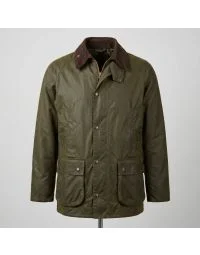
Some modern deck jackets swap jungle cloth for waxed cotton, which trades a little breathability for better shower resistance. If you choose that route, read our guide on how to rewax a waxed cotton jacket so the finish keeps working.
The pile lining: why it works and how to look after it
The original lining was a deep pile of alpaca and wool woven into a cotton backing. Pile traps a thick layer of still air close to the body, which is what keeps you warm, and animal fibre stays warm even when slightly damp. Reproductions and modern versions use anything from alpaca blends to wool, acrylic or polyester pile.
Pile is also the part most easily ruined by bad care. Heat, agitation and moisture together make wool fibres felt and mat, and once the pile is flattened it never quite recovers its loft.
- Brush, do not wash, for routine care. A soft clothes brush lifts dust and restores loft. Brush in the direction of the pile.
- Air it out. Hang the jacket open on a broad hanger in a ventilated room after a wet or sweaty day. Most smells leave with fresh air and time.
- Spot clean stains. Dab with cool water and a small amount of wool-safe detergent, then blot. Spot test on a hidden area first.
- Avoid the dryer. High heat shrinks and mats natural pile. Dry flat or hanging, away from radiators.
- Follow the care label. Synthetic pile can tolerate more than wool or alpaca, but only the label tells you which you have. For a vintage original or any valuable piece, use a professional cleaner who handles wool and leather.
- Store with moth protection. Wool and alpaca are moth food. Store clean, in a breathable garment bag, with cedar or lavender.
How a deck jacket fits compared with an MA-1
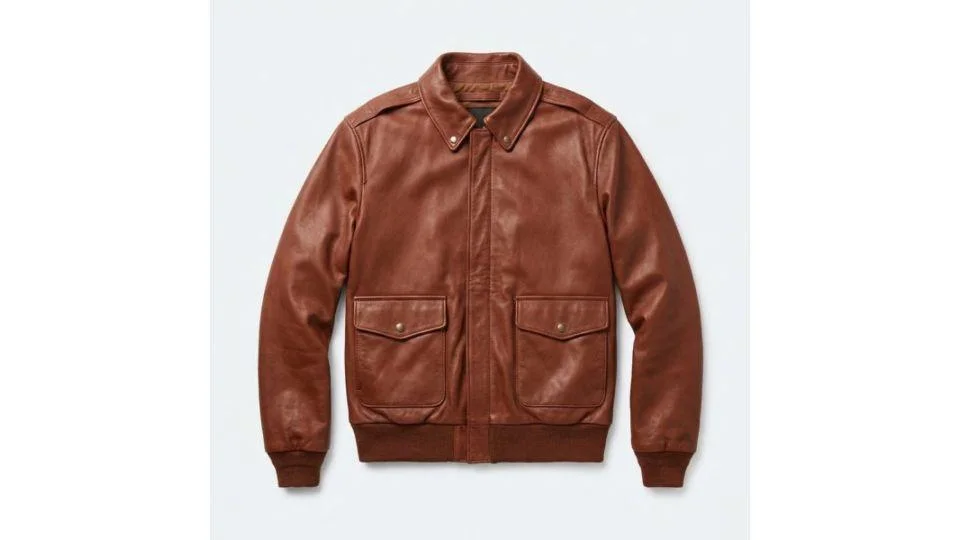
People often shop the two side by side because both are short military-pattern jackets. They fit very differently.
| Fit point | N-1 deck jacket | MA-1 flight jacket |
|---|---|---|
| Body shape | Straight and boxy; hangs from the shoulders | Blouses over a rib-knit waistband |
| Length | Around the hip, sometimes slightly longer | Sits at the waist |
| Hem | Open hem, no rib | Rib-knit band pulls in at the waist |
| Bulk | Thick lining adds visible bulk to chest and arms | Light insulation; trimmer through the body |
| Collar | Deep pile collar with chin strap | Low rib-knit collar |
| Layering | Best over a T-shirt, flannel or light sweater | Comfortable over a hoodie or heavier knit |
In practice this means your usual MA-1 size may feel snug in a deck jacket, because the pile takes up room inside. Take your body measurements and compare them with the chart on our size guide rather than assuming the same letter size. If you are between sizes, you can choose Made to measure on the product page and enter your own measurements; see how made to measure works.
How to wear one today
The deck jacket's short, straight line works best with straight or slightly tapered trousers. Raw or rinse denim, chinos and fatigue trousers all suit it. Leave the chin strap unbuckled and let the collar fall open in milder weather, and turn it up with the strap closed when the wind picks up. A deck jacket is a natural partner to other wartime work wear, such as the Army's winter combat jacket covered in our article on tanker jacket history.
If you want the look in a modern build, browse our deck and waxed cotton jackets. Check each product page for the shell fabric and lining, because they decide how warm the jacket is and how it should be cleaned.
Deck jacket FAQ
Is a deck jacket warm enough for winter?
As guidance, not a rating: a pile-lined deck jacket is comfortable for cold, windy days around freezing when you are moving. For long periods standing still in deep cold, a hooded parka is the better tool.
Is a deck jacket waterproof?
No. Jungle cloth and sateen resist wind and light spray. Waxed versions handle showers better, but none is a substitute for a rain shell in a downpour.
What does N-1 mean?
It is the Navy's type designation for this jacket within its deck clothing series. The letter marks it as a Navy item and the number identifies the model.
Should I buy a vintage original or a reproduction?
Originals are collectible and often show moth damage, worn pile and tired zips, so they suit collectors. A modern military-pattern version is the practical choice for daily wear.
Sources
We cross-checked construction details and dates against these collector and dealer references, which also note that dates vary between sources: International Military Antiques: original WWII N-1 Navy deck jacket and Heddels: N-1 deck coat coverage.