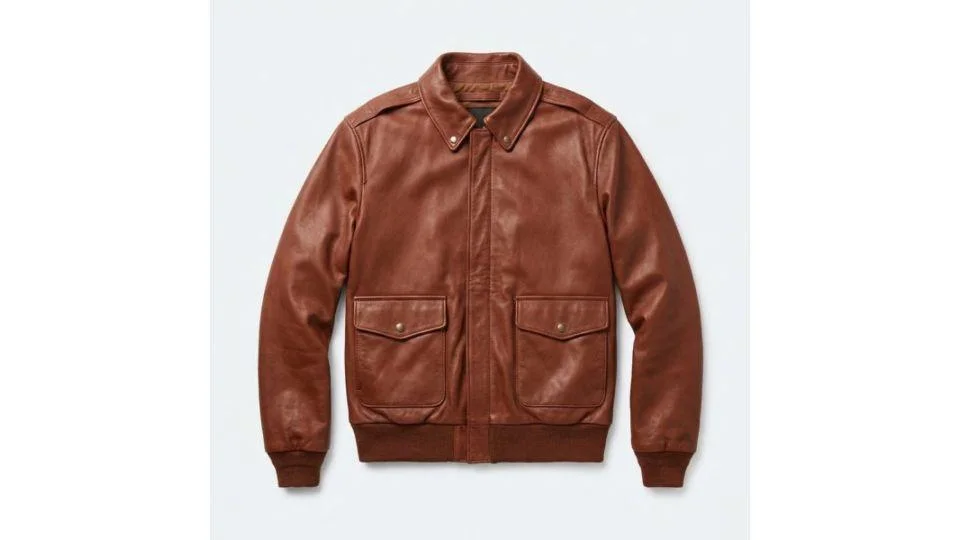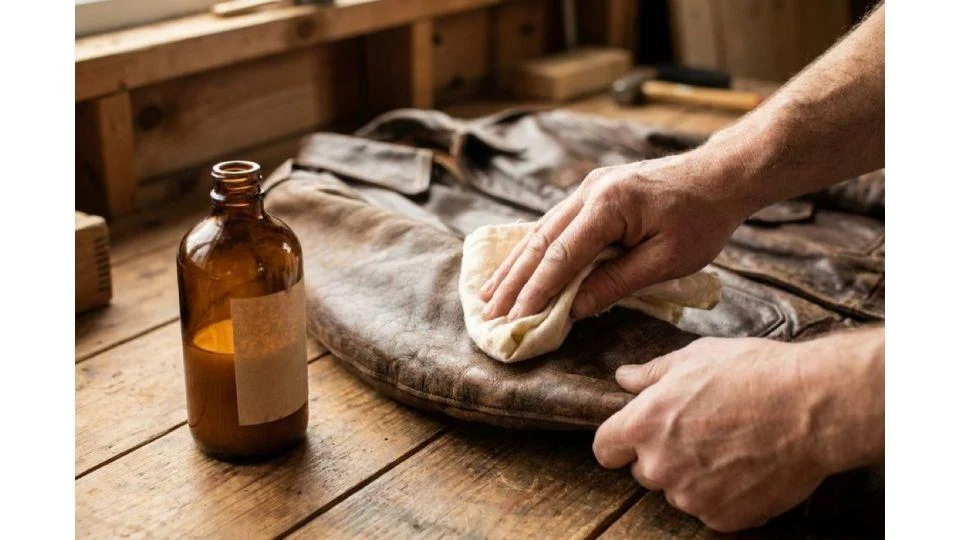
To remove mold from a leather jacket, take it outdoors, let it dry completely if it is damp, then brush the growth off gently with a soft brush, ideally into the nozzle of a vacuum with a HEPA filter. Wipe the leather with a cleaner made for garment leather, let it air-dry in a dry, ventilated place, and condition lightly only if needed. Then fix the cause: mold grows on leather when humidity stays high and air does not move.
Before you start, make sure it is actually mold. White marks on leather are often something else, and the fix is different.
Mold, spew or salt? An identification table
Conservators note that fatty spew, a waxy bloom of fats working out of the leather, looks alarmingly like mold. Run through these checks on the jacket before deciding what to do.
| Check | Mold or mildew | Fatty spew (bloom) | Salt or water lines |
|---|---|---|---|
| Look | Fuzzy or powdery spots, white, gray, green or black; may be patchy or spreading | Even, whitish haze or crystals, often over oiled areas and seams | White wavy lines or tide marks, usually near hem and cuffs |
| Smell | Musty, damp, earthy; often the first sign | Little smell, or a slightly stale oily smell | No particular smell |
| Rub test (gloved finger, hidden spot) | Smears and may leave a stain or tiny dark pits | Wipes away cleanly, often with a waxy feel, and may return days later | Gritty; dissolves with a damp cloth |
| Where it shows | Collar, armpits, inside the lining, anywhere stored damp | Areas that were heavily conditioned or oiled | Places that met road spray, sea air or sweat |
| Typical cause | High humidity, poor airflow, stored damp or dirty | Too much oil or fat-based dressing, or fats in the original tannage | Salt water drying on the surface |
| What to do | Follow the removal steps below | Wipe or soft-brush it off; stop conditioning for a while | See our guide to a leather jacket in the rain |
The Canadian Conservation Institute suggests a further test for waxy deposits: roll a cotton swab lightly dampened with mineral spirits over a small hidden area; if the white haze disappears after about 15 minutes, it was likely wax or fat. Spot-test this carefully, since solvents can affect some finishes. If you are still unsure, treat it as mold.
How to remove mold from a leather jacket
Protect yourself first
Mold spores can irritate the lungs and skin. Work outdoors, wear disposable gloves and a well-fitting N95 mask, and keep anyone with allergies, asthma or a weakened immune system away from the job.
Step by step
- Isolate it. Move the jacket away from other clothes right away. If you need to carry it, use a bag for transport only, and take it out as soon as you get outdoors.
- Dry it first if it is damp. Hang it outside on a dry, shaded day or in a well-ventilated room at normal temperature. Brushing damp mold smears it into the leather.
- Brush it off outdoors. Use a soft brush and work in one direction, ideally guiding the debris into a vacuum nozzle with a HEPA filter held close to the surface. A standard vacuum can blow spores back into the air.
- Clean the leather. Wipe each panel with a garment leather cleaner on a soft cloth, seam to seam, following the product directions. Some cleaners suggest a diluted alcohol solution for mildew; alcohol can strip dye and finish, so spot-test first or skip it.
- Deal with the lining. Turn the jacket inside out, brush the lining outdoors, then wipe with a cloth barely dampened with water and mild detergent.
- Air it. Hang it in a dry, airy place for a day or two. Sunlight on the lining helps freshen it, but keep strong sun off the leather itself.
- Condition lightly, if needed. Only once fully dry, and only if the leather feels dry. Over-oiling feeds mold.
- Clean up. Wash brushes and cloths, empty the vacuum outdoors, and clean the closet or storage space where the jacket was.
Check the jacket again after a week. Mold that returns quickly usually means spores are still in the lining, the padding or the closet itself.
Why leather jackets get moldy
Leather is organic, and the oils and fats in it are food for many molds. Add humidity and still air and growth follows. The Canadian Conservation Institute notes that mold grows on leather at relative humidity of roughly 65% and above, and gives approximate growth times of about two days at 90 to 100% RH, ten days at 80% and a hundred days at 70%. A jacket hung damp in a closed closet, packed into a plastic bag, or left in a basement over a humid summer is at real risk.
Storage humidity guidance
- Target: The US EPA recommends keeping indoor humidity below 60%, ideally between 30 and 50%. Conservators often aim for about 45 to 55% for leather, and warn that very dry air, under about 30%, can leave leather brittle.
- Measure it: An inexpensive hygrometer in the closet tells you whether you have a problem before the jacket does.
- Control it: A dehumidifier in damp rooms, moisture absorbers in small closets, and a gap between garments so air can circulate.
- Avoid: basements, attics, exterior walls that sweat, spots near pipes, and plastic bags or sealed vinyl covers.
- Check: Look at stored leather every few months, especially after humid spells.
Our full guide on how to store a leather jacket covers hangers, garment bags and an end-of-season checklist.
Getting rid of the musty smell
A faint musty smell often lingers after the visible mold is gone. Airing in a dry, shaded, breezy place for several days does most of the work. For persistent odors, see how to remove a smell from a leather jacket. A smell that comes back strongly within days suggests mold is still growing somewhere inside.
When to throw it out (or call a professional)
Home treatment works for light surface growth on an otherwise sound jacket. Consider a professional leather cleaner, or letting the jacket go, if:
- Mold covers large areas, or is growing inside the padding or interlining where you cannot reach it.
- The leather has dark stains or pitting that remain after cleaning.
- The leather feels weak, powdery or tears easily, a sign of rot rather than surface growth.
- The smell returns strongly after two careful cleanings.
- Someone in your home has a mold allergy or respiratory condition.
For vintage or sentimental pieces, a specialist leather cleaner or textile conservator is worth consulting before you throw anything away.
A soft brush, garment leather cleaner and light conditioner from our leather care collection cover the home steps above.
FAQ
Can I use bleach or vinegar on mold on leather?
Avoid bleach completely; it discolors and damages leather. Vinegar is a common home suggestion, but its acidity can affect dyes and finishes. A cleaner made for leather, spot-tested first, is safer.
Will freezing kill mold on a leather jacket?
Conservators use freezing to stop active growth on wet items, but it does not kill spores. The jacket still needs cleaning and drier storage afterward.
Why does the white haze keep coming back after I wipe it?
If it wipes off cleanly and has a waxy feel, it is probably fatty spew rather than mold. It can recur as fats keep migrating, especially after heavy conditioning. Stop adding oils and wipe it off as it appears.
Sources
Identification tests, removal steps and growth thresholds draw on the Canadian Conservation Institute's CCI Notes 8/1: Removing Mould from Leather and the US National Park Service's Conserve O Gram 9/1: Leather Dressings. Humidity targets come from the US EPA's A Brief Guide to Mold, Moisture and Your Home. Follow your jacket's care label, and consult a professional leather cleaner for valuable pieces.