To store a leather jacket between seasons, clean it and let it dry completely, empty the pockets, then hang it on a wide, shaped hanger inside a breathable cotton or non-woven garment bag. Keep it in a cool, dark, dry closet with space around it, ideally at 40 to 55% relative humidity. Never store it in plastic, in a basement or attic, or folded in a box for months.
The details below are about avoiding the three things that go wrong in storage: mold, distortion and drying out.
End-of-season storage checklist
- Empty every pocket. Keys, coins and phones stretch pockets and leave imprints; receipts and tissues hold moisture.
- Clean it. Skin oils, sweat, food traces and road salt left on the leather all get worse with time. Wipe down the collar and cuffs at minimum.
- Dry it completely. If it has been out in rain or snow recently, give it at least a day or two hanging in a dry room before it goes away.
- Condition only if it needs it. If the leather feels dry, apply a thin coat a week or so before storage so it has time to absorb. Do not store a freshly oiled jacket; surplus oil plus a closed closet is an invitation to mold.
- Fix small problems now. Loose buttons, a sticky zip or a seam starting to open are easier to repair before storage than after.
- Close it up. Do up the zip or the top button so the front hangs in shape. Straighten the collar and pocket flaps.
- Support the shape. Fill the shoulders and upper sleeves loosely with acid-free tissue if the jacket is heavy or the leather is soft.
- Hang it with space around it. Leave a few inches on each side so air can circulate and nothing presses folds into it.
- Check it mid-season. Take it out every couple of months, look for spots or musty smells, and let it air for an hour.
Hanger choices
| Hanger | Good for leather? | Why |
|---|---|---|
| Thin wire | No | Concentrates weight on two points, leaving shoulder bumps and stretching; can rust |
| Thin plastic | No | Too narrow for a jacket's shoulders; can snap under heavy jackets |
| Velvet slimline | Light jackets only | Grips well, but too thin to support heavy leather |
| Wide wooden, shaped shoulders | Yes | Spreads weight across the shoulder seam and holds the jacket's shape |
| Padded hanger | Yes, especially for soft leathers and vintage pieces | Gentle support; museums use padded hangers for structured garments |
Choose a hanger whose ends sit just inside the shoulder seams. Too wide pushes out the sleeve heads; too narrow lets the shoulders collapse.
Garment bag choices
| Cover | Use it? | Notes |
|---|---|---|
| Dry cleaner's plastic bag | No | Traps moisture and can cling; remove it as soon as you get home |
| Vinyl or sealed plastic zip bag | No | Not breathable; condensation and mold risk |
| Breathable non-woven garment bag | Yes | Keeps dust off and lets air through; affordable |
| Cotton canvas or muslin bag | Yes, best | Breathable, soft, keeps light out; wash it occasionally |
| Old cotton sheet draped over the shoulders | Yes, as a stopgap | Better than plastic; keeps dust off the shoulders |
Where to store it, and where not to
Good places: an interior bedroom closet or wardrobe away from exterior walls, at normal room temperature, out of direct sunlight.
Avoid:
- Basements and garages: damp, and often humid enough for mold over a summer.
- Attics: heat dries leather out and can make finishes tacky.
- Near radiators, heating vents, water heaters or pipes: heat and condensation both cause trouble.
- Vacuum-seal bags: crush leather and set deep creases.
- Cardboard boxes folded flat: creases set and cardboard absorbs humidity.
- Sunlit spots: UV fades dyes, often unevenly along the shoulders.
Humidity: the number that matters
Mold is the main storage risk. The Canadian Conservation Institute notes that mold grows on leather at roughly 65% relative humidity and above, while very dry air, below about 30%, can leave leather brittle. A target of 40 to 55% suits most closets. A cheap hygrometer tells you where you stand, and a dehumidifier or moisture absorbers bring a damp closet down. If you have already found white or fuzzy spots, see our guide to leather jacket mold.
Storing shearling and fur-trimmed jackets
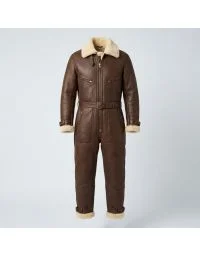
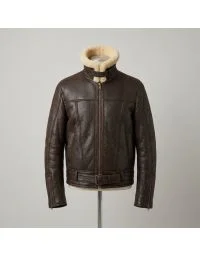
Shearling jackets and B-3 style bombers are heavy, and the wool side brings an extra risk: clothes moths feed on wool and fur. A few extra steps help:
- Use the widest, strongest shaped hanger you have; heavy shearling stretches at the shoulders on anything less.
- Brush the wool side gently with a soft brush before storage to remove debris and moth eggs.
- Make sure the wool is fully dry; damp shearling mats and smells.
- Use cedar blocks or lavender sachets in the closet as a moth deterrent, but keep them from touching the leather directly.
- Give it more space than a leather jacket; crushed fleece flattens.
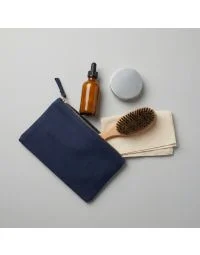
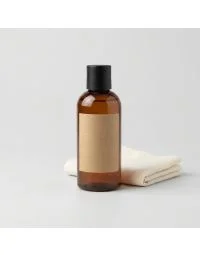
Our shearling B-3 jackets are good examples of the weight and bulk you are storing. Brushes, cleaners and conditioners for the pre-storage clean are in our leather care accessories.
Short-term storage and travel
For a few days, roll the jacket loosely with tissue inside rather than folding it flat, and hang it as soon as you arrive. Folds from a short trip usually drop out within a day or two on a good hanger; if they do not, our guide on getting wrinkles out of a leather jacket ranks the safe fixes.
FAQ
Should a leather jacket be hung or folded?
Hung, on a wide, shaped hanger. Folding for long periods sets creases. The exception is a very fragile vintage piece, which a conservator may recommend storing flat in a box with acid-free tissue.
Can I store a leather jacket in a vacuum bag?
No. Compression sets hard creases, and sealed plastic traps any moisture inside.
How often should I check a stored jacket?
Every couple of months, and after any humid spell. Look at the collar, armpits and lining, and sniff for mustiness.
Sources
Humidity and mold thresholds draw on the Canadian Conservation Institute's CCI Notes 8/1: Removing Mould from Leather and CCI Notes 8/2. Hanger guidance draws on CCI Notes 13/5: Hanging Storage for Costumes. Follow your jacket's care label, and ask a professional leather cleaner about valuable or vintage pieces.