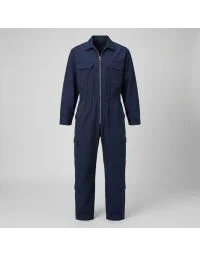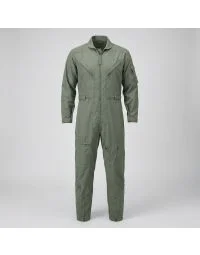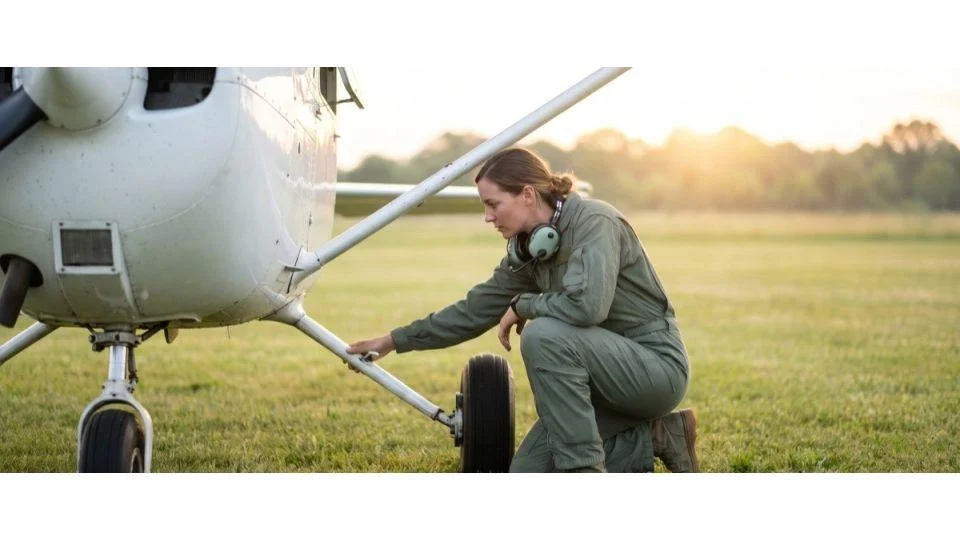
What pilots wear depends on what they fly. Airline pilots wear a company uniform: shirt with epaulettes, tie, dark trousers and a jacket or sweater. Private pilots usually fly in ordinary clothes, ideally natural fibres. Military aircrew and many helicopter crews wear a one-piece flame-resistant flight suit, in the US the CWU-27/P made from Nomex® fabric, with flight gloves, boots and a jacket over the top.
The one-piece suit is the garment most people picture, and it has the longest story. It began as a padded overall for open cockpits and turned into a fire-resistant work garment for the jet age.
What pilots wear, by type of flying
Each layer has a job. This breakdown shows what each type of pilot typically wears and the reason behind it.
| Type of flying | Main garment | Over and under | Hands and feet | Why |
|---|---|---|---|---|
| Airline | Company uniform shirt and trousers | Uniform jacket or sweater, hat on some airlines | Dark leather shoes | Authority and identification for passengers and crew |
| General aviation | Everyday clothes, cotton or wool preferred | Layer for the cabin temperature; a flight jacket is popular | Closed shoes with thin soles for rudder feel | Comfort and clear control feel; synthetics can melt in a fire |
| Military fixed wing | Flame-resistant one-piece flight suit | Flame-resistant or natural-fibre underlayers; flight jacket; G-suit on fast jets | Flame-resistant gloves; leather flight boots | Fire protection, pockets reachable while strapped in, nothing loose to snag |
| Helicopter | Flame-resistant flight suit, often two-piece in civilian work | Survival vest or flotation over water; helmet | Gloves; protective boots | Fire risk, rotor-downwash debris, cold over water |
| Aerobatic and display | Flame-resistant suit common | Parachute and harness | Light gloves; thin-soled shoes | Fire protection and freedom of movement under load |
For a practical packing list if you fly light aircraft, see what to wear flying a small plane.
From open cockpits to the first flying suits
In the First World War, cockpits were open and unheated, and early pilots often bought their own leather coats, helmets and gloves. In 1916 the Australian pilot Sidney Cotton noticed that oil-soaked overalls kept him warmer and developed a layered one-piece suit, later known as the Sidcot suit, with a fur lining, an airproof middle layer and a gabardine outer. Versions of the Sidcot stayed in British service for decades.
By the Second World War, the problem had split in two. Bomber crews at high altitude needed sheepskin and electrically heated suits. Fighter pilots, crammed into small cockpits, needed lighter overalls with pockets they could reach while seated. American summer flying suits of the period were cotton or light wool, with pockets set on the chest and shins.
The jet age: cotton to Nomex®
After the war, jets and pressurised cockpits reduced the need for bulky warmth. The new threat was fire. A cotton suit offers little protection in a fuel fire, and nylon melts.
The US Air Force K-2B, a cotton one-piece suit with a front zip, chest pockets and a pencil pocket on the sleeve, was widely worn into the Vietnam era. Around the same time DuPont introduced Nomex®, a meta-aramid fibre with built-in flame resistance (the brand has been owned by Arclin since April 2026). Through the late 1960s and 1970s US forces moved to Nomex® suits, and the CWU-27/P became the standard American one-piece. It is still issued today in sage green and desert tan. Our explainer what is Nomex covers how the fibre works.
Anatomy of a modern military flight suit
A CWU-27/P-pattern suit looks simple, but every detail is functional.
- Two-way front zip. Opens from the bottom as well as the top, which matters when wearing a harness for hours.
- Thigh and calf pockets. Reachable with a seat harness on. Leg pockets carry checklists, pens and small kit.
- Sleeve pen pocket. On the upper arm, so a pen is reachable without unstrapping.
- Name tape and patch panels. Hook-and-loop panels on the chest and shoulders take name tapes and unit patches.
- No back pockets. Anything on your back is uncomfortable against an ejection seat or harness.
- Adjustable waist and cuffs. Hook-and-loop tabs pull in loose fabric that could catch on switches.
Nomex® flight suits outside the cockpit
Flight suits have a strong following off the flight line: at airshows, in vintage-themed events, in film costume work and simply as robust coveralls. Fashion and heritage garments are not certified PPE; do not rely on them for firefighting, welding or other fire hazards. A military-pattern suit made with Nomex® fabric is durable and well made, but treat it as clothing unless it is certified to a protective standard for your specific hazard.
If you want one, browse our flight suits and coveralls and the wider Nomex® flight gear range. Check the product page for fabric composition, and use the size guide; one-piece suits are sized by chest and height, so both measurements matter. Suits can also be ordered Made to measure, where you add your inseam and torso measurements; see how made to measure works. Aramid fabric needs specific laundry care, explained in how to wash a Nomex flight suit.
Flight suit FAQ
Do airline pilots wear flight suits?
No. Airline pilots wear their company's uniform. Flight suits belong to military, helicopter, aerial work and some display flying.
What do fighter pilots wear under the flight suit?
Typically underlayers in cotton, wool or flame-resistant fabric, because synthetic base layers can melt in a fire. On fast jets an anti-G garment is worn over the lower body.
Why are flight suits green?
Muted colours such as sage green and desert tan are generally explained as camouflage: a downed crew member is less visible on the ground. Bright orange suits have been used where being seen matters more, such as for test pilots and some sea and space flights.
Sources
Dates and details were checked against Wikipedia: Flight suit, the Smithsonian National Air and Space Museum: Suit, Flying, Type K-2B and the Air Force Materiel Command history office: uniforms.