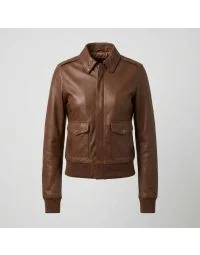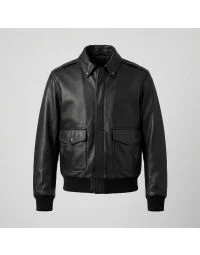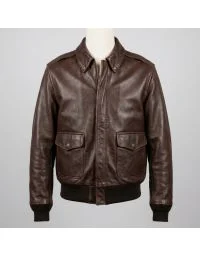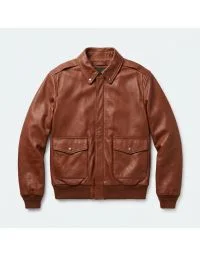
Most leather jacket repairs are worth doing, because the leather shell usually outlasts everything sewn into it. Torn linings can be patched or fully replaced, broken zips can often be fixed with a new slider or replaced outright, and worn knit cuffs and waistbands can be swapped for new ribbing. Small seam splits are an easy job for a leather repairer. Large tears, cracked or rotted leather, and jackets that need several major repairs at once are where repair stops making sense.
For anything beyond a slider swap or a loose button, use a specialist who works on leather garments. A general tailor may not have the needles, machine or experience for heavy hides.
Why the parts fail before the leather
A leather jacket is a mix of materials with very different lifespans. Original Second World War A-2 jackets in museum collections, for example, combine a horsehide body with a rayon lining, knit wool cuffs and waistband and a metal zip. The hide can last decades; the lining, knits and zip take most of the daily friction and wear out first. A repair plan that replaces those parts on schedule can keep a good shell going far longer. Our guide on how long a leather jacket lasts looks at lifespan in more detail.
Repair-or-replace table by fault
| Fault | DIY? | Specialist? | Usually not worth it when |
|---|---|---|---|
| Zip slider slips or splits open behind itself | Sometimes: gently pinch the slider back into shape, or fit a new slider of the same size | Yes, quick job | Rarely |
| Zip teeth missing or tape torn | No | Full zip replacement | The jacket also needs a lining and new knits |
| Lining torn at armpit or pocket | Yes, hand-stitch the lining fabric | For neat results | Rarely |
| Lining shredded or stained throughout | No | Full lining replacement | The leather is also cracked or dried out |
| Pocket bag worn through | Yes, if you can reach it through the lining | Yes | Rarely |
| Knit cuffs or waistband stretched, holed or moth-eaten | No (the knit is sewn between leather layers) | Replace knits | Rarely; it transforms an old jacket |
| Seam opened along stitching, leather intact | No | Restitch along original holes | Rarely |
| Small tear or puncture, under about an inch | Temporary leather repair patch from inside | Invisible repair or patch | Rarely |
| Large tear across a panel | No | Panel replacement | The hide match is poor or the jacket is low value |
| Cracked, dried or crumbling leather | No | Assessment only | Usually; cracked leather does not heal |
| Snaps or hooks pulled out | No | Reset with backing leather | Rarely |
Costs vary widely by region and by hide thickness, so get a quote with photos before posting a jacket anywhere.
Leather jacket lining replacement
The lining is the part people search about most, because it is the first thing to go at the armpits, cuffs and pocket openings.
Patch or replace?
- Patch if the damage is local: a split seam, one torn armpit, a worn pocket edge. A matching fabric patch or a few hand stitches restores it.
- Partial reline if one area is gone, such as the sleeves or the top of the back. Some repairers replace just the sleeve linings or overlay new fabric across the shoulders.
- Full reline if the fabric is rotten, stained throughout or tearing everywhere you touch it.
What happens in a full reline
The repairer unpicks the old lining, uses it as a pattern, cuts new panels in a similar weight of fabric, and sews the new lining back in along the facings and cuffs. On jackets with knit cuffs, the knits are often replaced at the same time because the same seams are opened. Ask what fabric they plan to use; a quilted lining adds warmth and bulk, while a cotton or rayon lining keeps the original feel.
DIY lining fixes
A torn lining seam is a simple hand-sewing job. Turn the jacket inside out, use a fine needle and a thread matched to the lining, and close the split with small slip stitches. Do not sew through to the leather; stitch holes in leather are permanent.
Zip repairs
Most failing zips have a worn slider, not broken teeth. Signs: the zip closes but the teeth separate behind the slider. Gently squeezing the back of the slider with pliers can buy time, but the proper fix is a new slider of the matching size, which is usually marked on the back of the old one. If teeth are missing, bent or the tape is torn, the zip needs replacing. That means unpicking stitching along both front edges, so choose a specialist; on heavy hides the new zip should go back in along the original stitch holes.
Knit cuffs and waistband
Knit trims stretch, fade, catch and attract moths. Replacement ribbing is sewn between layers of leather at the cuffs and hem, so it is not a home job. A good repairer will match the color and weight, and can often reuse the original stitch lines. Fresh knits make an old jacket look and feel years younger and stop cold air getting in at the wrists.
Tears, holes and seams
Leather does not fray, so small tears are stable if you deal with them quickly. A leather repairer can back the tear with leather from inside, glue it and blend the color. For an open seam where the leather itself is intact, restitching along the original holes is a quick and nearly invisible repair. Large tears may need a whole panel replaced, which depends on matching the hide's color and grain.
Prevention saves most repairs
- Empty heavy pockets; keys and phones wear through pocket bags and pull at seams.
- Close the zip before hanging, and work a stiff zip with a little zip wax instead of forcing it.
- Keep the leather supple: dry leather tears more easily. Our guide on how to clean a leather jacket covers routine care.
- Store on a wide hanger with moth protection for wool knits.
If your old jacket is past saving, our leather jackets include replacement styles, and the A-2 flight jackets keep the knit cuffs and waistband of the original pattern.
FAQ
Can a regular tailor replace a leather jacket lining?
Some can. Linings are fabric work, but the lining joins the leather at facings and cuffs, so choose someone used to leather garments.
Is it worth repairing a cheap leather jacket?
Small fixes like a slider or lining patch usually are. Several major repairs on a low-cost jacket often are not.
Can I glue a tear in a leather jacket?
A leather repair patch or flexible leather glue from the inside works as a temporary fix. A specialist repair lasts longer and looks better.
Sources
Original A-2 construction (horsehide body, rayon lining, knit wool cuffs and waistband, metal zip): Smithsonian National Air and Space Museum: Jacket, Flying, Type A-2. Zip slider replacement basics: VAUDE: How do I replace the slider of the zipper?.