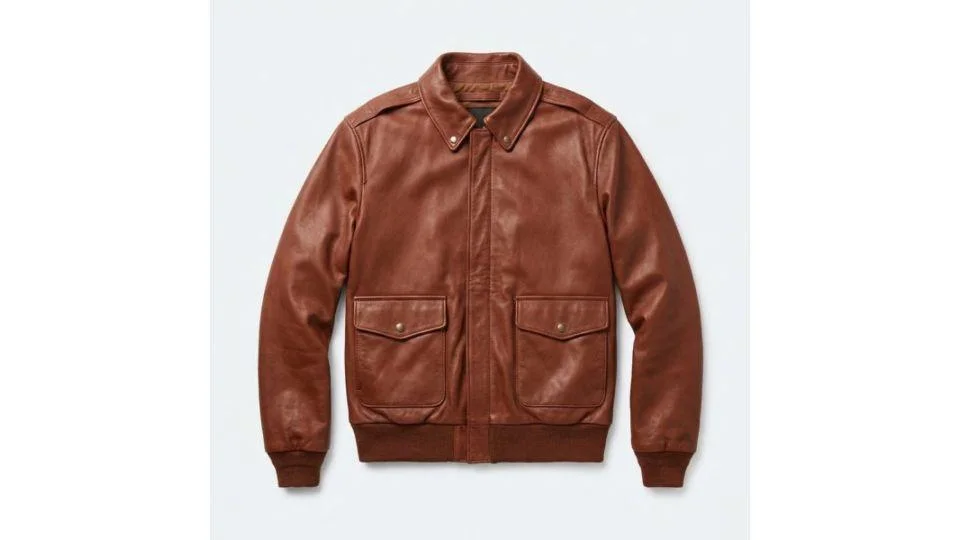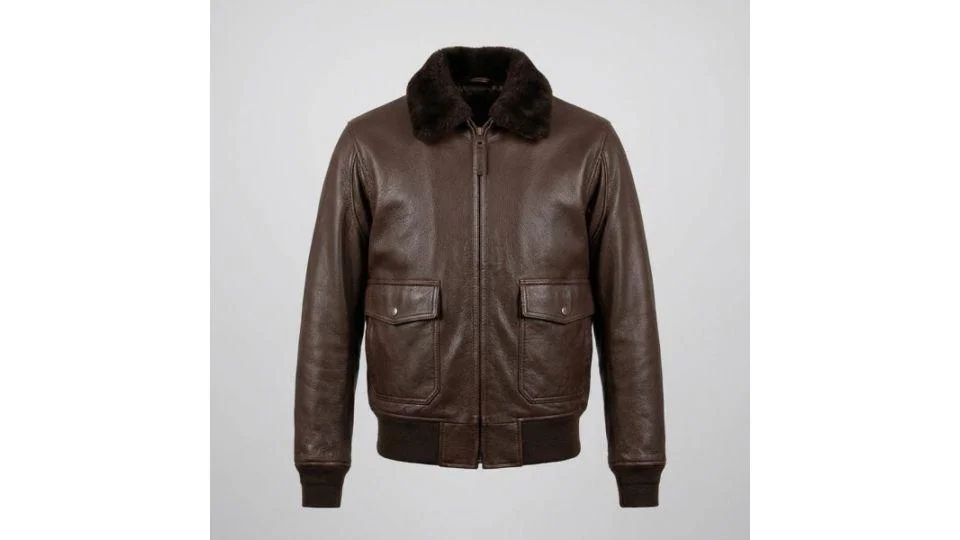
A well-made full-grain leather jacket that is cared for and stored properly can last for decades, often 20 years or more of regular wear, and many survive far longer as vintage pieces. Cheap jackets made from split or heavily coated leather may start cracking or peeling within a few seasons. In practice, the hide is rarely the first thing to fail: zippers, knit cuffs, linings and stitching wear out first, and all of them can be repaired.
So the honest answer to how long a leather jacket lasts is "as long as the leather does, if you keep replacing the parts that are meant to wear out."
The evidence that leather can last
Flight jackets offer a useful long-term test. The A-2 was adopted by the U.S. Army Air Corps in 1931, and wartime examples still exist in museum collections. The Smithsonian's National Air and Space Museum, for example, holds a horsehide A-2 associated with the B-26 bomber Flak-Bait, more than 80 years after it was made. Vintage dealers routinely sell wearable jackets from the 1950s and 1960s.
Those survivors share a pattern: the leather is intact, but cuffs, waistbands, linings and zips have often been replaced or show heavy wear. That is the lifespan story in one sentence.
Lifespan factors table
Use this table to estimate how long a particular jacket is likely to last and what is shortening its life. The timeframes are broad guidance from typical wear patterns, not guarantees.
| Factor | Helps it last decades | Shortens its life | Can you fix it later? |
|---|---|---|---|
| Hide grade | Full-grain, reasonable thickness | Split, bonded or heavily coated leather that peels | No; you cannot upgrade the hide |
| Hide type | Horsehide, cowhide, goatskin for daily wear | Thin lambskin used as a daily workhorse | No |
| Stitching | Strong thread, sensible stitch density, reinforced stress points | Weak thread, too many holes too close together (perforates the leather) | Yes, re-stitching is routine |
| Hardware | Heavy metal zips, solid snaps | Light zips with plastic sliders | Yes, zips can be replaced |
| Lining | Durable cotton or quilted lining with reinforced pockets | Thin synthetic lining | Yes, relining is common |
| Care | Occasional cleaning and conditioning when dry | Never conditioned, or soaked in oil | Partly; dried-out leather can be restored if not cracked |
| Storage | Broad hanger, breathable cover, cool and dry | Wire hanger, plastic bag, damp basement or hot attic | Shoulder dents and mildew are hard to undo fully |
| Fit | Comfortable across shoulders and back | Too tight: seams and armholes strain | Limited; leather cannot be let out much |
The parts that wear out first
Knowing the usual failure order helps you budget for repairs instead of writing a jacket off.
- Knit cuffs and waistband. On A-2 and bomber styles, wool or acrylic knit stretches, frays and pills first. Replacing knits is one of the most common flight-jacket repairs.
- Zipper. Teeth wear, sliders loosen, and the tape can tear away. A failed zip does not mean a failed jacket.
- Pocket linings and the main lining. Keys, phones and coins wear through pocket bags; the body lining tears at the armholes and hem.
- Stitching at stress points. Underarms, pocket corners and the ends of zip tapes take the most load.
- Edges and high-wear surfaces. Cuffs, collar points, elbows and the hem edge scuff first. This is cosmetic for a long time and is part of the patina that makes leather jackets look better with age.
- The leather itself. Real failure (cracking through the grain, tears, rot) usually follows long-term neglect: drying out, repeated soaking, or storage in damp conditions.
Our leather jacket repair guide covers which of these you can handle yourself and which need a specialist.
Signs your jacket is near the end, and signs it is not
| Usually fixable or cosmetic | Serious, may not be worth repairing |
|---|---|
| Scuffs, fading, color changes | Deep cracks through the grain over large areas |
| Broken zip or snaps | Leather that tears like paper when stressed |
| Frayed knit cuffs or waistband | Widespread peeling of a coated surface |
| Torn lining or pocket bags | Rot or persistent mold through the hide |
| Loose seams | Shrinkage after soaking and heat-drying that has distorted the pattern |
How to extend a leather jacket's life
- Wear it. Regular wear keeps leather flexible; jackets left folded for years tend to crease and dry out.
- Let it dry naturally. If it gets wet, hang it on a broad hanger at room temperature, away from radiators and hair dryers.
- Condition sparingly. Condition when the leather looks or feels dry, not on a fixed schedule. Spot test any product on a hidden area first and follow the care label.
- Store it well. Use a wide, shaped hanger and a breathable cover, in a cool, dry closet.
- Fix small problems early. A loose stitch or a thinning cuff is cheap to repair before it spreads.
- Use a professional for valuable pieces. For vintage or expensive jackets, a professional leather cleaner is safer than home experiments when in doubt.
Frequently asked questions
Do leather jackets go out of style?
Classic shapes such as the A-2, G-1 and plain bomber have stayed in production for decades, which is part of why a long lifespan is realistic for them.
Is a 30-year-old leather jacket still wearable?
Often yes. Check the leather for cracking and tearing, then budget for replacing knits, zip or lining if needed.
Does wearing a jacket in the rain shorten its life?
Occasional rain is fine if the jacket dries slowly at room temperature. Repeated soaking without drying properly is what causes stiffness, cracking and mildew.
If you are shopping for a jacket you intend to keep for decades, browse our leather jackets and check each product page for the hide, lining and hardware.
Sources
A-2 adoption and service history from A-2 jacket (Wikipedia). Museum example from the Smithsonian National Air and Space Museum: Jacket, Flying, Type A-2, Flak-Bait. Tanning background from Encyclopaedia Britannica: leather.