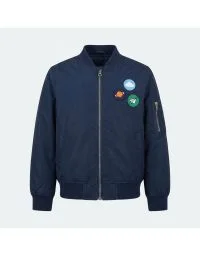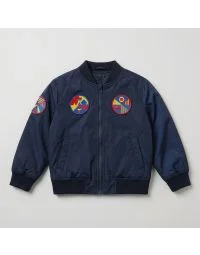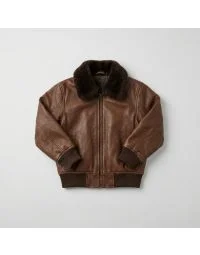
To choose a kids bomber jacket that lasts more than one winter, size by your child's chest measurement and height rather than their age, then allow modest growth room: enough that the shoulders still sit near the shoulder bone and the sleeves can be folded or pushed up slightly, not so much that the jacket hangs off them. Knit cuffs and a knit waistband, as on MA-1 style bombers, make a little extra length easy to live with. For everyday wear, a washable nylon bomber is the practical choice; leather makes most sense for older children and occasional wear.
Growth-room guidance by age band
Children grow at different rates, so treat these bands as guidance and always check the actual measurements against the size guide. The aim is a jacket that is wearable and safe now, with room to spare later.
| Age band | How they grow | How much room to leave | What to watch |
|---|---|---|---|
| Toddlers (about 2 to 4) | Fast, and in bursts | A little: sleeves no further than the knuckles | Long sleeves get in the way of hands, play and climbing; avoid anything that needs rolling more than once |
| Younger kids (about 5 to 8) | Steady | Modest: enough for a sweater underneath and about one fold at the cuff | Shoulder seams sliding well down the arm mean too big |
| Older kids (about 9 to 12) | Steady, then a growth spurt may start | Moderate: room in sleeve length and body length rather than width | Hem riding up above the waist is the first sign they have outgrown it |
| Teens (about 13 and up) | Big spurts, then slowing | Fit closer to adult advice; buy for now plus a little sleeve length | Shoulders broaden quickly; check shoulders before sleeves |
The two-winter test
When your child tries the jacket on (over a sweater), check three things. The shoulder seam should be no more than about a finger's width past the shoulder bone. The cuffs should reach the knuckles at most, with knit cuffs gathering the extra. The waistband should sit at or below the waist when they raise their arms. If all three pass, the jacket is likely to last into next season.
How to measure a child for a jacket
Measure over a T-shirt with a soft tape. Chest goes around the fullest part under the arms, tape level. Sleeve goes from the bone at the back of the neck, over the shoulder, to the wrist with the elbow slightly bent. Height matters too; many children's charts are organized around it. Our guide on how to measure for a jacket has the full method; with kids, have them stand still against a wall and do it quickly before they lose interest.
Leather vs nylon for kids
| Nylon bomber (MA-1 style) | Leather flight jacket (G-1 or A-2 style) | |
|---|---|---|
| Weight | Light | Heavier, especially in cowhide |
| Washing | Usually washable; follow the care label | Not machine-washable; wipe clean, condition occasionally |
| Rough play | Tolerant, but can snag or tear on sharp edges | Very tough against scuffs |
| Mud and food | Easy to clean | Needs prompt wiping; stains can set |
| Rain | Sheds light rain | Fine if dried slowly at room temperature |
| Fire safety | Nylon is not flame resistant; keep away from campfires and fireplaces | Leather chars rather than melts but is not protective gear |
| Hand-me-down potential | Good | Excellent; leather can outlast several children |
| Best for | School, playground, everyday | Older kids, family photos, special occasions, matching outfits |
The MA-1 started life as a jet-age flight jacket and became a classic in its own right; our MA-1 jacket history tells that story if your child is curious about where their jacket came from.
Safety points for children's outerwear
- Drawstrings: U.S. Consumer Product Safety Commission rules treat hood and neck drawstrings on children's upper outerwear in sizes 2T to 12 as a strangulation hazard, and limit waist and bottom drawstrings in sizes 2T to 16. Most bomber jackets avoid drawstrings entirely thanks to their knit collar and waistband, which is a point in their favor.
- Car seats: the American Academy of Pediatrics advises against bulky coats under car-seat harnesses because padding compresses in a crash. Thin bombers are better than puffy coats, but the safest approach is still to buckle the child in without the coat and lay it over the harness or put it on backwards.
- Patches and pins: sewn-on patches are better than pin badges for younger children.
Easy-care checklist for parents
- Read the care label before the first wash, and turn nylon jackets inside out.
- Close zippers and snaps before washing to protect the shell and lining.
- Use a gentle cycle and cool water for nylon; never tumble-dry leather.
- Blot spills on leather straight away with a damp cloth; do not rub.
- Air-dry on a hanger at room temperature, away from radiators.
- Spot test any cleaner or conditioner on a hidden area first.
- Check knit cuffs and the waistband each season; they wear first.
- Store clean and dry on a broad hanger so it is ready for the next child.
Frequently asked questions
Should I buy a size up for my child?
Often one size up is reasonable for fast-growing kids, but only if the shoulders still fit. If the shoulder seam hangs well down the arm, the jacket is too big to be safe and comfortable for play.
Is a leather jacket practical for a toddler?
It can be for occasions and photos, but nylon is easier for everyday wear because it can usually be washed.
Are kids bomber jackets warm enough for winter?
A lined bomber over a sweater suits cool to cold days; for deep cold, a hooded parka is warmer. This is guidance, not a rating.
Browse our kids jackets, including kids MA-1 bomber jackets for everyday wear and kids flight jackets in leather and heritage styles.
Sources
Drawstring rule from the U.S. Consumer Product Safety Commission: Drawstrings in Children's Upper Outerwear. Car-seat coat guidance from HealthyChildren.org (American Academy of Pediatrics): Winter Car Seat Safety Tips.