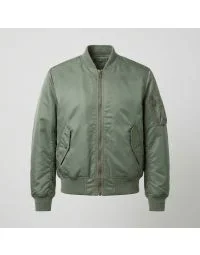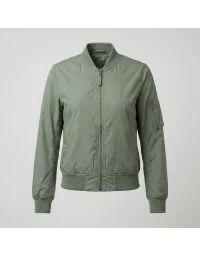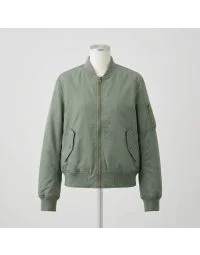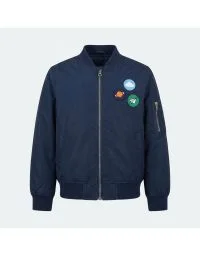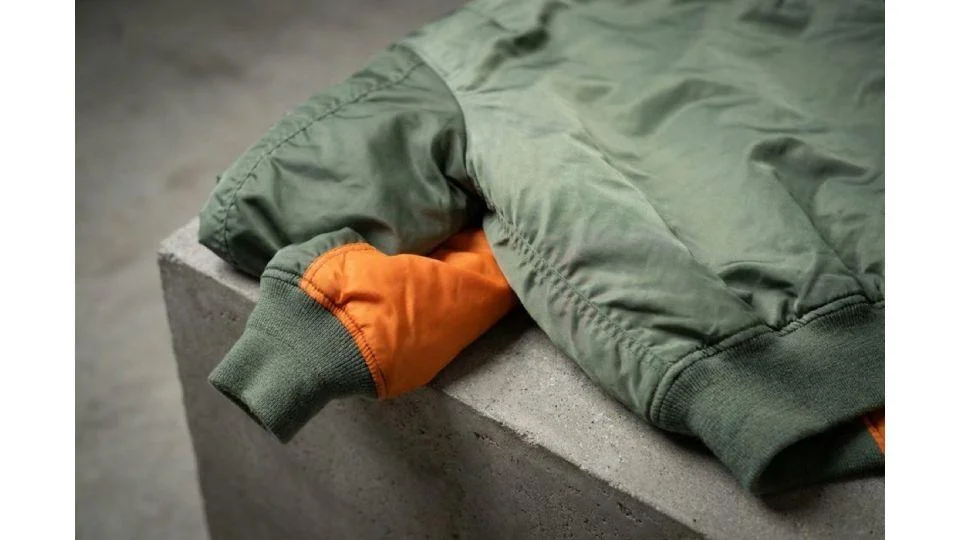
The MA-1 is a lightweight nylon flight jacket developed for US Air Force jet crews in the 1950s, with a knit collar, knit cuffs and waistband, slanted flap pockets and a zipped pen pocket on the left sleeve. From the early 1960s it gained a bright orange lining so the jacket could be worn inside out for visibility. It was replaced in service by flame-resistant aramid jackets in the 1970s, and by then surplus MA-1s were already becoming one of the most copied jackets in fashion.
What the jet age demanded
The MA-1 makes sense once you look at the cockpit it was designed for. Jets changed four things at once:
- Enclosed, heated cockpits. Pilots no longer needed sheepskin; they needed a lighter intermediate layer for the flight line, the cockpit and the ground.
- Hard helmets and parachute harnesses. The fur collar on the earlier B-15 is widely reported to have caught on helmets and harness straps. A flat knit collar removed that problem.
- Weight and bulk. In a cramped ejection-seat cockpit, every layer counts. Nylon was lighter than leather or cotton and dried quickly.
- Things to carry. The zipped sleeve pocket with pen slots kept writing tools reachable while strapped in.
The result was a jacket that looked simple but solved jet-age problems neatly. Its weakness was fire: nylon melts and drips when it burns, which is exactly why the services later moved to aramid fabrics. The original MA-1 nylon was never flame resistant, and neither are most fashion MA-1s today. Our comparison of MA-1 vs CWU-45/P vs B-15 explains the switch in detail.
The orange lining: what we know and what is folklore
Ask why an MA-1 is orange inside and you will usually hear: so a downed pilot could turn it inside out and be spotted by rescuers. That is the widely repeated explanation, and the reversible design clearly allowed it. What is less clear:
- When it appeared. Early MA-1s had a sage green lining with the specification label at the neck. Collector records of surviving contract jackets place the first orange-lined MA-1s in the early 1960s, with some citing 1961 and others 1962.
- How often it was used that way. We have not found an official document describing how often crews actually reversed the jacket in a rescue. Treat dramatic stories as anecdotes rather than records.
- The color name. Collectors often call it Indian orange or rescue orange. Exact shades varied by contract and fade differently with age.
What matters for today's buyer: the orange lining is now a style signature. Many modern MA-1s are reversible, so you can wear the orange side out if you like the look.
From flight line to street: a subculture timeline
The MA-1's second life happened outside the military. Dates below are broad strokes; style history rarely has clean start dates.
| Period | Who adopted it | What changed |
|---|---|---|
| 1960s | Servicemen and surplus-store shoppers, including in Europe near US bases | Surplus MA-1s became cheap, tough everyday jackets |
| Late 1960s–1980s | British skinheads, mods and punks | Became a uniform of youth subcultures; colors such as black and burgundy joined sage green |
| 1970s–1990s | Japanese Americana and vintage collectors | Interest in accurate reproductions and original contract details grew |
| 1990s–2000s | Hip-hop, rave and club scenes; high fashion | Oversized fits, bold colors and designer runway versions |
| 2010s–today | Streetwear, menswear and womenswear generally | A wardrobe basic in cropped, oversized, women's and kids' cuts |
Along the way the MA-1 became the default picture of a bomber jacket, even though it was issued to aircrews in general rather than specifically to bomber crews. For the wider family of bombers, see what is a bomber jacket.
How to tell a classic MA-1 pattern
- Knit collar, cuffs and waistband in a matching color.
- Zip front with a wind flap behind the zipper.
- Two slanted flap pockets at the front, with snaps.
- A zipped utility pocket with pen slots on the upper left sleeve.
- Orange lining (or sage green for early-style reproductions).
Wearing an MA-1 today
One practical note before you buy: original-style MA-1s blouse over the knit waistband by design, so they look fuller in the body than a tailored jacket. That is intentional, not a sizing mistake.
The MA-1 is the most versatile flight jacket for everyday wear: light enough for spring and fall, easy to layer under for winter, and simple to clean according to its care label. Treat warmth as guidance, not a rating; it is an intermediate jacket, not a parka. Browse our MA-1 bomber jackets, our women's flight and bomber jackets and the kids' MA-1 bomber jackets for military-pattern versions in different cuts. Check the size guide before ordering, since MA-1 cuts range from slim to deliberately oversized.
MA-1 FAQ
Why is the MA-1 lining orange?
The usual explanation is visibility: a downed crew member could reverse the jacket to stand out to rescuers. Collector records suggest the orange lining was introduced in the early 1960s.
Is an MA-1 flame resistant?
No. MA-1 jackets are nylon, which melts in a fire. Flame-resistant aramid jackets such as the CWU-45/P replaced the MA-1 in service for that reason.
Is the MA-1 still issued?
Not as flight gear. It was replaced in service during the 1970s, though it remains widely available as a civilian and surplus-style jacket.
Sources
The timeline draws on the Wikipedia flight jacket article (for lining color and subculture adoption) and Air Force Magazine: The Jacket That Lives Forever for the wider move from leather to fabric jackets. Orange-lining dates follow collector research on surviving contract jackets and are approximate.