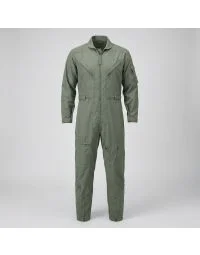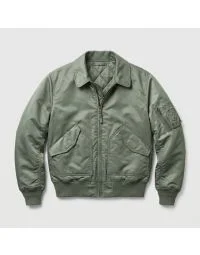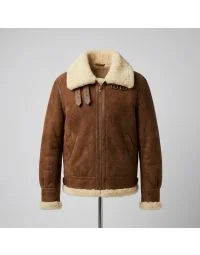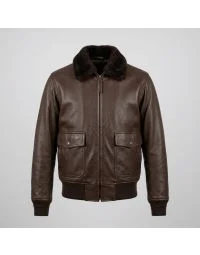
To measure yourself for a jacket you need three numbers: chest (around the fullest part, under the armpits and across the shoulder blades, tape level, breathing normally), sleeve length (from the shoulder point, or from the center back of the neck, down to the wrist bone with the arm slightly bent), and back length (from the prominent bone at the base of the neck down to where you want the hem). Use a soft tape, wear a thin shirt, and have someone else hold the tape. Then compare your numbers with the brand's chart, not with a size label from another brand.
Body measurements vs garment measurements
This is the most common source of confusion. Size charts can list either kind, and they are not interchangeable.
| Body measurement | Garment measurement | |
|---|---|---|
| What it is | The size of you | The size of the finished jacket |
| How it is taken | Tape around or along your body | Jacket laid flat and measured with a ruler or tape |
| Chest | Full circumference at the fullest point | Usually armpit to armpit across the front, then doubled |
| Relationship | Smaller | Larger, because the pattern adds ease for movement and layers |
| Use it to... | Pick a size from a body-measurement chart | Compare a new jacket with one you already own that fits |
The difference between the two is called ease. A flight jacket meant to go over a sweater has more ease than a close-cut biker jacket. If you compare your body chest with a garment chest, you will always think the jacket is too big. Check which kind the chart lists before you choose; our size guide lists body measurements, so compare it with your own tape measurements.
What you need
- A soft, non-stretch tailor's tape (not a metal tape measure)
- A helper; measuring your own back and sleeve is unreliable
- A thin, close-fitting shirt, or the layer you will wear under the jacket
- A mirror, so you can check the tape is level
- Paper or your phone to write numbers down immediately
Step by step with a helper
1. Chest
- Stand naturally with feet together and arms relaxed. Do not puff the chest or hold your breath.
- Your helper passes the tape under your armpits, around the fullest part of the chest and across the shoulder blades.
- Check in the mirror that the tape is level all the way round, front and back.
- Breathe out normally. Health surveys such as the CDC's NHANES take waist measurements at the end of a normal breath for the same reason: it gives a repeatable number, and the same logic works for the chest.
- The tape should sit flat and snug without compressing. You should be able to slide one finger underneath.
2. Sleeve length
There are two common ways to measure sleeves. Check which one the chart uses.
- Shoulder-point sleeve: from the bony tip of the shoulder, down the outside of the arm, over a slightly bent elbow, to the wrist bone.
- Center-back sleeve: from the bone at the center back of the neck, across the shoulder point, then down the arm to the wrist bone. This version is longer and is common for outerwear and raglan sleeves. For an Aviation Outfit made-to-measure order, always use the shoulder-point method.
Have your arm relaxed at your side with the elbow bent slightly, as if resting a hand on your hip. A dead-straight arm under-measures the length you need when you reach.
3. Back length
- Tilt your head forward and find the most prominent bone at the base of the neck.
- Stand up straight, looking ahead.
- Your helper measures straight down the spine to where you want the hem: the belt line for most flight jackets, lower for field jackets and parkas.
4. Optional extras
- Shoulder width: across the back from shoulder point to shoulder point, following the curve.
- Waist or hip: at the level where the jacket hem will sit, useful for jackets with a fitted waistband.
- Bicep: around the fullest part of the upper arm, useful if you have muscular arms.
The garment method: measure a jacket you already like
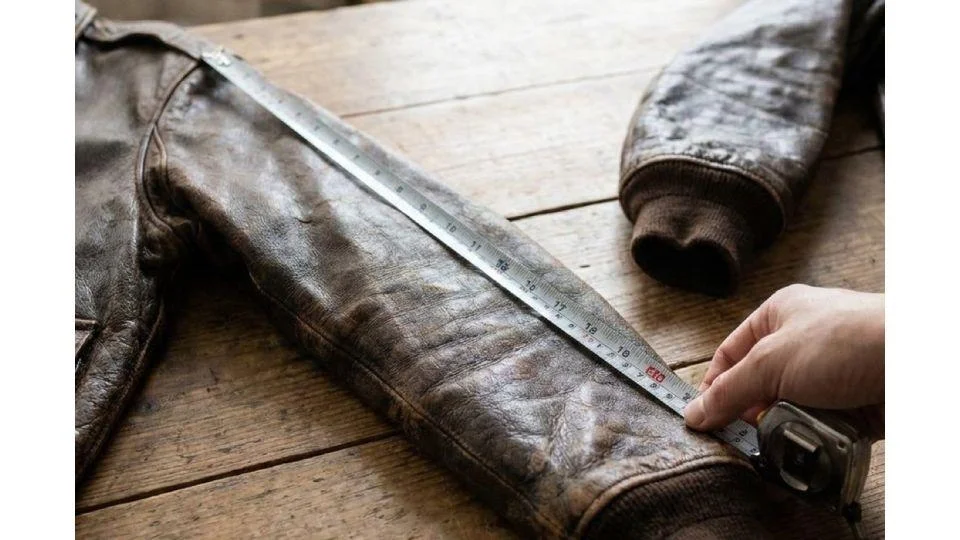
If you own a jacket that fits well, measure it as a cross-check. Lay it flat and zip it up. Measure across the chest one inch below the armpits and double it. Measure the sleeve from the shoulder seam to the cuff edge, and the back from the base of the collar to the hem. Because these are garment measurements, use them as a cross-check on the size you pick rather than reading them straight against a body-measurement chart.
Common measuring mistakes
| Mistake | What happens | Fix |
|---|---|---|
| Measuring over a thick sweater or hoodie | You size up too far and the shoulders swamp you | Measure over a thin layer; let the pattern's ease handle normal layering |
| Tape sloping down at the back | Chest reads too big | Use a mirror to keep it level |
| Holding a deep breath or puffing the chest | Chest reads too big | Read at the end of a normal breath |
| Pulling the tape tight | Chest reads too small, jacket feels tight | Snug, with one finger of slack |
| Straight arm for sleeves | Sleeves end up short when you reach | Bend the elbow slightly |
| Mixing sleeve methods | Sleeve number is several inches off | Check whether the chart uses shoulder-point or center-back |
| Using a size from another brand | Sizing differs between makers | Use your measurements, not labels |
| Measuring yourself alone | Back and sleeve numbers are unreliable | Ask for help or use the garment method |
What to do with your numbers
Match your measurements to the chart on our size guide. Prioritize the chest and shoulders, because leather and nylon can relax slightly in girth but not in length. If your sleeves or back length come out longer than standard for your chest size, look at our long and tall jackets collection. If your numbers do not fit any one size, choose Made to measure on the product page instead: you enter your chest, waist, hips, shoulder width, sleeve length, back length, height and weight, and pick a Slim, Regular or Room for layers fit. See how made to measure works, and read made to measure vs standard size to decide. Once the jacket arrives, use our checklist on how a leather jacket should fit to confirm.
Frequently asked questions
Should I measure in inches or centimeters?
Use whichever the chart uses, and write down the exact figure rather than rounding to a size.
Should I measure over a shirt?
Yes, a thin shirt. Do not measure over a coat, hoodie or chunky knit.
Can I measure myself without help?
The chest is possible with a mirror. For sleeve and back length, use a helper or measure a jacket that fits you instead.
Sources
Measurement technique informed by the CDC NHANES Anthropometry Procedures Manual (2016). Body-measurement definitions are standardized in ISO 8559-1: Size designation of clothes, anthropometric definitions for body measurement.