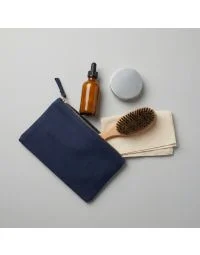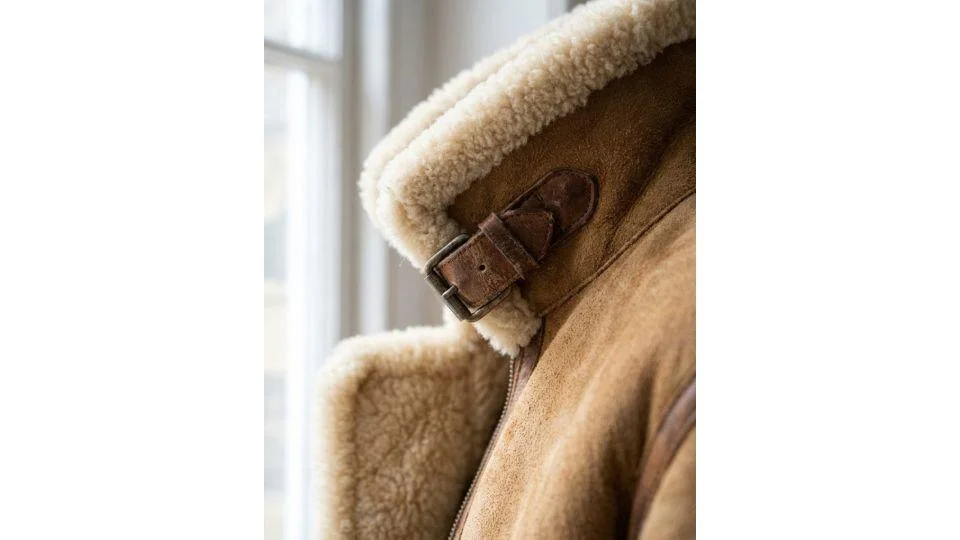
To clean a suede jacket, start dry: brush the whole jacket with a suede brush in one direction, rub marks with a suede eraser, and lift oily spots with cornstarch left overnight. For water marks, dampen the whole affected panel evenly with a barely wet sponge, let it dry naturally and brush. Never machine wash suede, never rub a wet stain, and never use cream or oil conditioners made for smooth leather.
Spot test everything on a hidden area first, follow the care label, and send valuable or vintage suede to a professional leather cleaner when a stain does not lift.
Why suede needs different care from smooth leather
Smooth leather has a tight grain surface that you can wipe, clean and condition. Suede has no grain surface. It is the inner side of the hide, or a split layer, buffed into a soft nap of short fibres. That open texture is what makes suede feel velvety, and also why it soaks up liquids and oils so quickly.
Three practical consequences follow:
- Water spreads and leaves rings because it wicks into the fibres and carries dye and dirt to the edge of the wet patch.
- Creams and oils flatten and darken the nap, often permanently.
- Rubbing burnishes the fibres flat, leaving shiny patches at cuffs, pocket edges and elbows.
So most suede care is mechanical (brushing, erasing, absorbing), not chemical. If you also own smooth-leather jackets, keep the two routines separate; our guide on how to clean a leather jacket covers the smooth side. For the material differences in full, see suede vs leather.
The suede tool kit
| Tool | What it does | Use it for |
|---|---|---|
| Soft suede brush (nylon or natural bristle) | Lifts dust and resets the nap direction | After every few wears; finishing every other step |
| Brass or crepe-rubber brush | Opens up flattened, matted fibres | Shiny or flat areas; use with light pressure only |
| Suede eraser (block) | Abrades away surface marks without liquid | Scuffs, grey marks, dried dirt |
| Cornstarch or talc | Draws oil out of the fibres | Grease, body oil at the collar, food spots |
| Clean white cloths and a sponge | Blotting and even dampening | Spills, water marks |
| Suede cleaner (liquid or foam) | Light all-over cleaning | When the eraser is not enough; spot test first |
| Suede protector spray | Slows down how fast liquids soak in | After cleaning, and on new jackets |
Most of these are in our leather and suede care range. Avoid colored cloths, which can transfer dye onto damp suede.
Stain-by-stain table
| Stain | First step | If it is still there | Avoid |
|---|---|---|---|
| Dry dirt or mud | Let mud dry fully, then brush off | Suede eraser, then brush | Wiping wet mud, which pushes it in |
| Grease or oil | Blot, cover with cornstarch, leave overnight, brush off | Repeat once; then a specialist | Water or soap, which spread oil |
| Water spots and rings | Dampen the whole panel evenly to the seams, dry naturally | Brush when dry; repeat | Hair dryer or radiator |
| Salt lines | Brush when dry | Dab lightly with a cloth dampened in 1:1 white vinegar and water, spot tested; dry and brush | Scrubbing |
| Coffee, wine, juice | Blot immediately with a dry cloth | Suede cleaner, spot tested; specialist if set | Rubbing; colored cloths |
| Ink | Leave it alone | Specialist cleaner | Alcohol, which can spread ink and lift dye |
| Chewing gum or wax | Harden with an ice cube in a bag, then pick off | Brass brush lightly, then soft brush | Heat |
| Shiny, worn areas | Suede eraser, then brass brush | Steam method below | Sandpaper |
How to fix water marks
Water marks are the most common suede problem, and the fix seems backwards: you add more water. A ring forms at the edge of a wet patch where dissolved dirt and dye settle as it dries. Wetting the whole panel moves that edge to a seam where it does not show.
- Brush the panel to remove loose dirt.
- Dampen a clean sponge with lukewarm water and squeeze it almost dry.
- Work across the entire panel, seam to seam, so it is evenly damp. Do not soak it.
- Stuff the sleeves or body loosely with white paper to hold the shape, and hang the jacket on a wide hanger at room temperature.
- When completely dry, brush the nap in one direction.
Spot test on an inside facing first. Some dyes in some suedes shift color with any water, and a specialist is safer for those.
Reviving flattened or shiny nap
Flat, shiny patches come from friction, body oils and pressure. Work from gentlest to strongest:
- Brush. A soft suede brush in short strokes against the nap, then with it.
- Erase. Rub the suede eraser over shiny areas like a pencil eraser, then brush away the crumbs.
- Brass brush. Light, short strokes to separate matted fibres. Heavy pressure tears suede.
- Steam. Hold the area about 6 to 8 inches from the steam of a kettle or garment steamer for a few seconds so the fibres relax, never letting it get wet. Let it dry for a minute, then brush.
Nap that has been worn away completely, typically on old cuffs, will not grow back. A specialist can sometimes re-dye and refinish it.
Protecting suede after cleaning
Once the jacket is clean and fully dry, apply a suede protector spray from about 6 inches away in light, even passes, after testing it on an inside facing. Let it dry overnight. Protectors do not make suede waterproof; they buy you time to blot a spill. Reapply after a deep clean or every few months of regular wear.
If you are weighing up a suede jacket against smooth leather, browse our leather jackets collection to compare finishes side by side.
FAQ
Can you wash a suede jacket?
Not in a machine or a tub. Water and agitation stiffen suede, shift dye and shrink linings. Some suede is labelled washable; follow that only if the care label says so.
Can I use a toothbrush instead of a suede brush?
For small areas, a clean, soft toothbrush works. It is slow on a full jacket and does not replace an eraser.
Does vinegar damage suede?
Diluted white vinegar used sparingly is a common fix for salt marks, but it is acidic and can affect some dyes. Test it first and do not use it on vintage suede.
Should I condition suede?
Not with creams or oils. Use products labelled for suede or nubuck only.
Sources
Suede and nubuck construction (flesh split, grain split, sanded grain): Collonil: The difference between nubuck and velours. General background: Suede (Wikipedia).