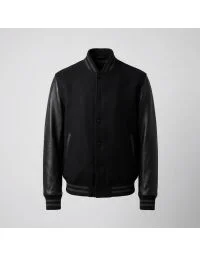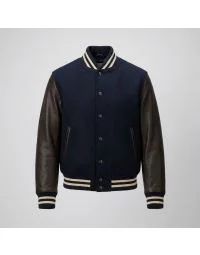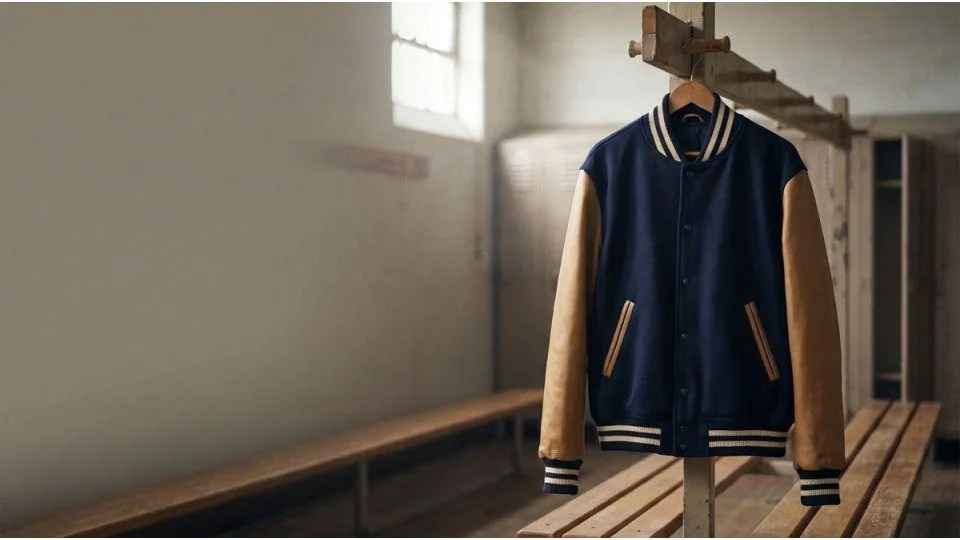
The varsity jacket grew out of the American college tradition of awarding athletes a letter. Harvard's baseball team is usually credited with putting an "H" on its uniforms in the 1860s, letter sweaters became the standard award by the 1890s, and in the 1930s the letter moved to a new kind of jacket: a wool body with leather sleeves, knit trim and snap front. That is still the classic varsity, or letterman, jacket today.
It is a jacket defined by two materials, which matters for how you wear it and especially for how you clean it.
From letter to sweater to jacket
The letter as a prize
Accounts of the tradition agree that Harvard was early. The baseball team reportedly sewed an Old English "H" onto its flannel shirts in 1865, and the football team adopted it in the 1870s. Players who took part in the biggest games, against rivals such as Yale, were allowed to keep the lettered shirt. That made the letter a prize, not just team identification. Details of these first years are thinly documented, so the dates are best read as approximate.
The letter sweater, 1890s to 1930s
By the 1890s, the award had moved to heavy knit sweaters. Harvard's 1891 baseball team is often cited as wearing black sweaters with a small crimson "H". Through the early 20th century the letter sweater spread to other colleges and to high schools. The award became a whole system: a letter for making the team, then pins, bars and chevrons for further honours.
The jacket, 1930s onward
In the 1930s, letters began appearing on jackets with wool bodies and leather sleeves. Wool melton kept the warmth of the sweater but held its shape and took a chenille letter cleanly. Leather sleeves stood up to wear at the cuffs and elbows. Rib-knit collar, cuffs and waistband, often striped in school colours, finished the look. After the Second World War, booming high school and college enrolment made it a fixture of American youth culture, and from there it moved into fashion and streetwear around the world.
The letter itself
Award letters are usually made of chenille, a tufted yarn, on a felt base. School tradition varies, but larger letters often mark the senior varsity squad and smaller ones junior varsity. The letter traditionally sits on the left chest.
Varsity jacket vs bomber jacket
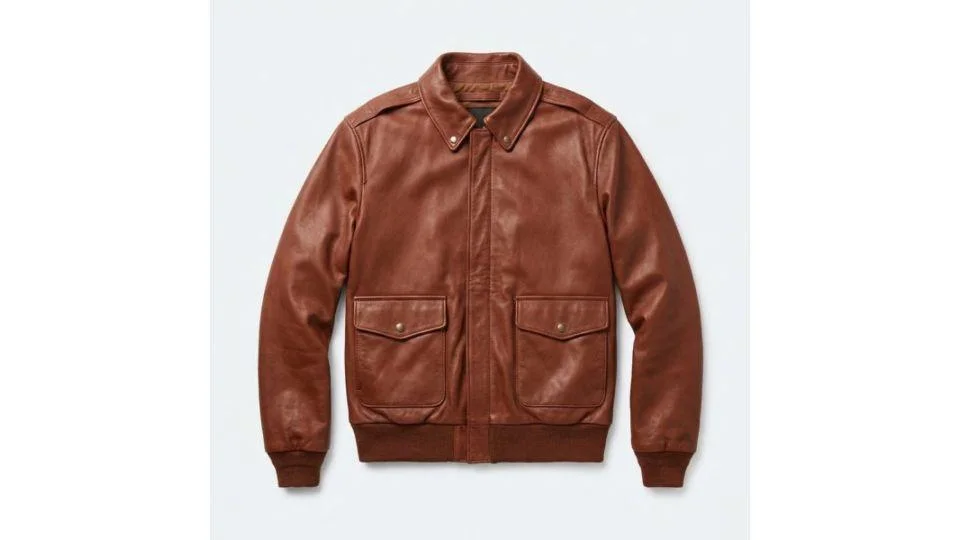
The two get confused because both are short, blouson-shaped jackets with rib-knit trim. Their origins and details differ.
| Feature | Varsity jacket | Bomber jacket |
|---|---|---|
| Origin | American school and college athletics | Military aviation |
| Classic materials | Wool melton body, leather sleeves | All leather, or nylon on MA-1 types |
| Closure | Snap buttons | Zip |
| Collar | Rib knit, usually striped | Rib knit, shirt collar or shearling, by type |
| Decoration | Chenille letters, school colours, embroidered names | Squadron patches, painted art, plain |
| Fit | Relaxed, roomy through the body | Trim to the body, blouses at the waist |
| Mood | Sporty, collegiate, colourful | Utilitarian, aviation, understated |
For more on the military side, read what is a bomber jacket.
Caring for wool melton and leather sleeves
A varsity jacket is two garments sewn together. Wool and leather need different care, and the methods that suit one can damage the other. This is the part most varsity guides leave out.
| Part | Routine care | Stains | Avoid |
|---|---|---|---|
| Wool melton body | Brush with a soft clothes brush after wear to lift dust and restore the nap | Blot, then dab with cool water and a little wool-safe detergent | Machine washing, hot water, rubbing hard; it can felt and shrink |
| Leather sleeves | Wipe with a slightly damp cloth; condition sparingly once or twice a year | Leather cleaner on a cloth, never poured on | Getting conditioner on the wool; it leaves dark marks |
| Chenille letter | Brush lightly in one direction | Spot clean with a damp cloth | Snagging on velcro and bag straps |
| Rib-knit trim | Reshape by hand if it stretches | Damp cloth | Hanging heavy items in the pockets |
When conditioning the sleeves, fold a cloth or tape some paper over the seam where leather meets wool so product does not bleed across. Always spot test cleaners and conditioners on a hidden area first, and follow the jacket's care label. Because of the mixed materials, a full clean should go to a professional cleaner who handles leather, especially for a vintage jacket. Our guide on how to clean a leather jacket covers sleeve care in more depth.
Store the jacket on a broad wooden hanger in a breathable cover. Wool attracts moths, so add cedar and check it at the change of seasons.
Fit notes
- Expect a roomy body. Varsity jackets are cut fuller than bombers so they layer over a hoodie or sweater. If you want a trimmer look, check chest measurements rather than sizing down blindly.
- Sleeve length matters more than usual. The knit cuffs should sit at the wrist bone. Leather sleeves do not stretch much in length.
- Waistband placement. The rib waistband should sit at or just below the belt line. Too long and it bunches; too short and it rides up.
- Measure yourself. Compare your chest and sleeve measurements with our size guide, which lists body measurements, or choose Made to measure on the product page and enter your own; see how made to measure works.
Browse our varsity jackets, and check each product page for the body and sleeve materials before you clean anything.
Varsity jacket FAQ
What is the difference between a varsity jacket and a letterman jacket?
None in practice. "Letterman" refers to the athlete who earned the letter; the jacket is the same.
Can I wear a varsity jacket without a letter?
Yes. Plain varsity jackets, or ones with non-school designs, are common in fashion.
Why do varsity jackets have leather sleeves?
Leather resists wear at the cuffs and elbows better than wool, and the contrast became part of the look.
Sources
History was checked against Wikipedia: Varsity letter and Wikipedia: Letterman (sports), which note that the earliest dates are thinly sourced.