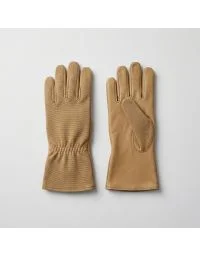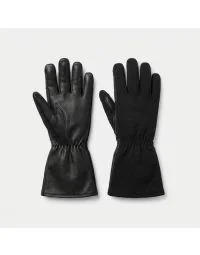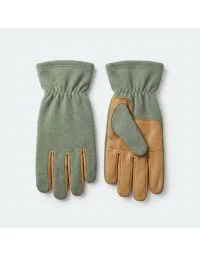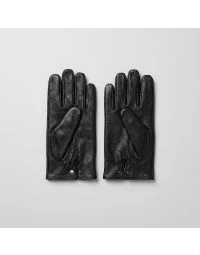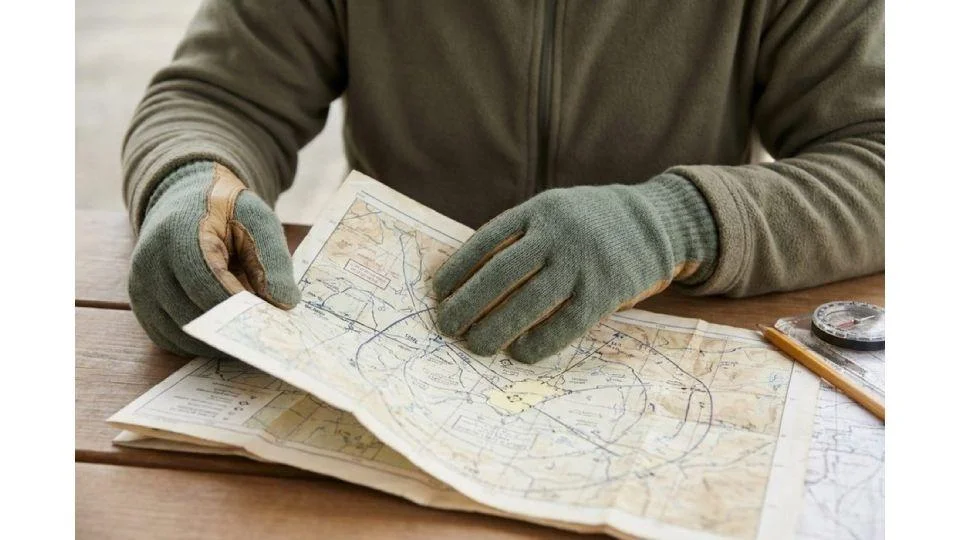
Flight gloves should fit like a second skin: snug across the palm and fingers so you can feel switches, turn pages and write, with a long cuff that overlaps your sleeve. The classic aviation design pairs a thin leather palm for grip with a stretchy knit back made from Nomex® fiber, which is flame resistant. All-leather pilot gloves look more traditional and are excellent for driving and cool-weather wear but do not offer the same flame resistance. To size either, measure around your palm just below the knuckles and compare the number with the glove's chart.
What makes a flight glove different
Aviation gloves evolved for a cockpit, not for warmth. U.S. military aircrews have long worn a lightweight, unlined summer flyer's glove with a leather palm and a knit, flame-resistant back. U.S. interagency fire aviation standards likewise prefer gloves of the GS/FRP-2 type, with a soft leather palm, a stretchable Nomex® back and a long cuff extending several inches above the wrist.
Three features carry over to good civilian versions:
- Thin palm leather (often goatskin, cabretta or sheepskin) for grip and feel.
- A stretchy back so the glove can be snug without restricting the knuckles.
- A long gauntlet cuff that tucks under or over a jacket or flight-suit sleeve so no skin is exposed at the wrist.
About Nomex®
Nomex® is a meta-aramid fiber developed by DuPont; since April 2026 the DuPont aramids business, including Nomex®, has been owned by Arclin. It is flame resistant: it resists ignition and does not melt and drip as nylon can. That does not make every glove containing it protective equipment. Fashion and heritage garments are not certified PPE; do not rely on them for firefighting, welding or other fire hazards. Read our explainer on what Nomex® is for the fiber's background.
How to measure your hand
- Use a soft tailor's tape. Measure your dominant hand, which is usually slightly larger.
- Open your hand flat with fingers together and thumb relaxed to the side.
- Wrap the tape around the widest part of the palm, just below the knuckles, leaving the thumb out.
- Keep the tape snug but not tight. Note the measurement.
- Measure hand length too: from the crease at the base of the palm to the tip of the middle finger. This matters if you have long fingers relative to palm width.
- Measure twice and use the larger figure.
The sizing table approach
Glove sizes are not standardized between makers, so do not rely on a size you wear in another brand. Instead, understand how charts are built and match your numbers to the specific chart. Our size guide lists the measurements for the gloves we carry.
| Chart type | How it works | What to do with your numbers |
|---|---|---|
| Numbered sizes | The size number usually tracks palm circumference in inches | Find the number closest to your palm measurement; if between, read the next row |
| Letter sizes (S, M, L) | Each letter covers a range of palm measurements | Check where you fall within the range; near the top, consider the next size up for leather-only gloves |
| Length-adjusted charts | Some charts add hand length or finger length | If your fingers are long for your palm, prioritize length so fingertips are not compressed |
| Between sizes | Knit-backed gloves stretch; full leather stretches less | Nomex®-backed: the snugger size is usually fine. All-leather: the larger size is usually more comfortable |
How a correctly sized glove feels
- Fingertips touch the ends of the glove fingers without pressing.
- No loose material at the fingertips when you pinch a pen or coin.
- Making a fist does not pull tightly across the knuckles.
- The palm leather does not bunch when you grip a stick, wheel or handlebar.
Flying gloves vs fashion gloves
| Feature | Flight-style glove (leather palm, Nomex® back) | All-leather pilot glove | Insulated fashion glove |
|---|---|---|---|
| Main purpose | Dexterity and feel | Grip, style, light warmth | Warmth |
| Fit | Very snug | Snug, molds over time | Roomy for lining |
| Flame resistance | Back fabric is flame resistant; not certified PPE | Leather resists brief contact with heat better than synthetics, but this is not a protective rating | Often synthetic linings; not flame resistant |
| Touch and switches | Excellent | Good | Poor |
| Warmth | Low (unlined) | Low to moderate | High |
| Cuff | Long gauntlet | Usually wrist length | Varies |
| Best for | Flying, driving, motorsport-inspired style, uniforms | Driving, everyday heritage style | Cold weather on the ground |
Warmth notes are guidance, not a rating. If you want warmth and dexterity together, a thin unlined flight glove under a loose outer mitten works better than a thick glove.
Care basics
- Follow the care label; requirements differ between leather-palm and all-leather gloves.
- Let damp gloves dry flat at room temperature, never on a heater.
- Spot test any leather conditioner on the cuff first, and use it sparingly on palms so they stay grippy.
- For valuable gloves, or if you are unsure, ask a professional leather cleaner.
Frequently asked questions
Should flight gloves be tight?
Snug, not tight. You should be able to make a fist without strain and feel small objects.
Do flight gloves stretch?
Knit backs give a little and leather palms soften with use, so a slightly snug new glove usually becomes comfortable.
Are flight gloves good for driving?
Yes. The thin palm and close fit give good wheel feel, which is why many people wear them for driving.
Do flight gloves make a good gift?
They do if you know the recipient's hand size. See our guide to gifts for pilots for other ideas.
Compare styles in our Nomex® flight gloves and our leather pilot gloves.
Sources
Glove construction preference from the National Interagency Fire Center: Interagency Standards for Fire and Fire Aviation Operations (Red Book) document. Nomex® ownership from Textile World: Arclin completes acquisition of the DuPont Aramids business.