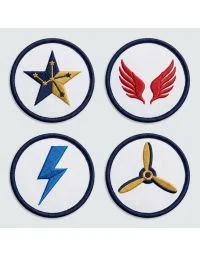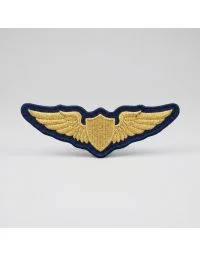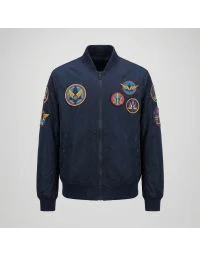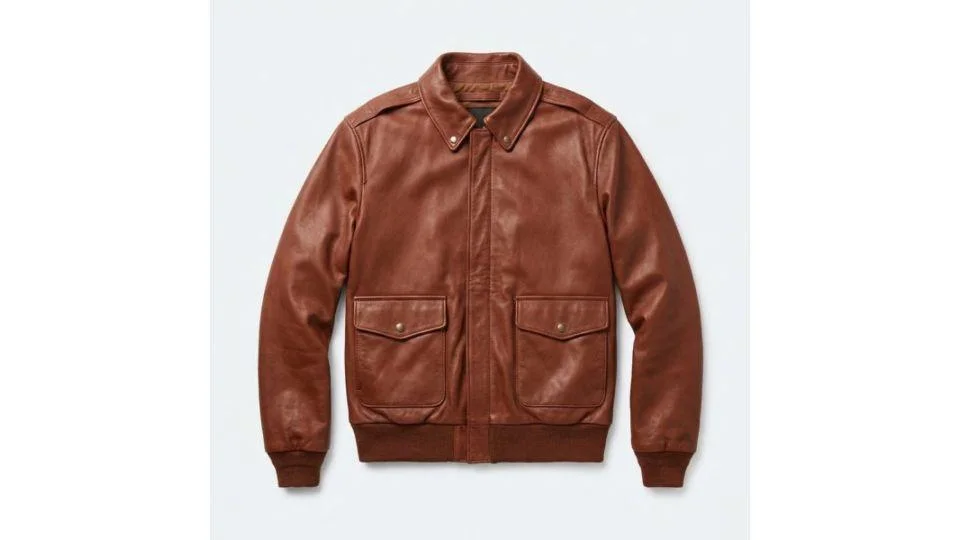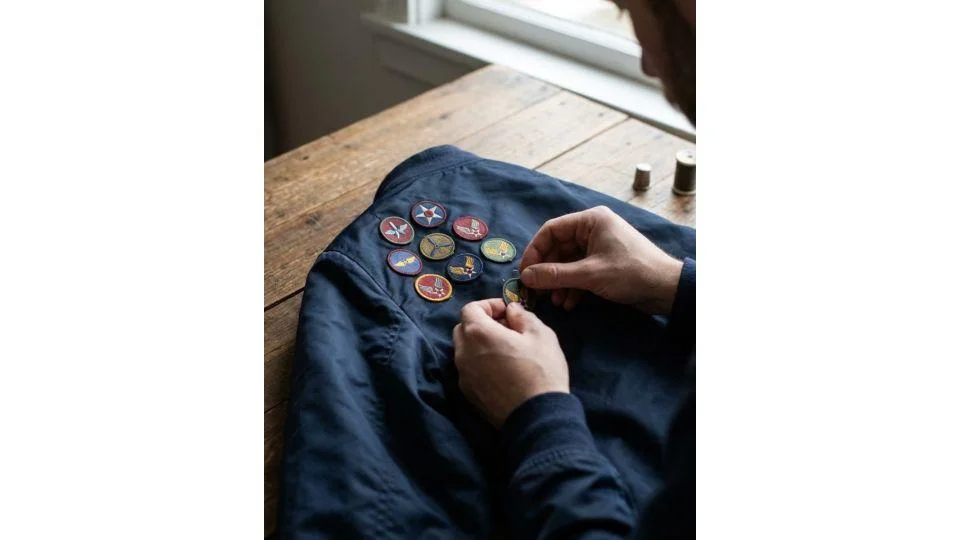
The best way to put a patch on a leather jacket is to hand sew it with a leather needle and strong waxed or polyester thread, using the patch's own edge as your guide, or to have a leather repair shop or cobbler stitch it for you. Never iron a patch onto leather: the heat needed to melt the adhesive can scorch, shrink or harden the hide. Glue alone is a short-term fix at best. Plan placement carefully first, because every needle hole in leather is permanent.
Nylon flight jackets are more forgiving, and many modern pilot jackets come with hook-and-loop panels made for patches. The details are below.
A short history of flight jacket patches
Patches and painted insignia have been part of flight jackets since the 1930s. American airmen personalised their A-2 and G-1 jackets with squadron insignia, nose art copied from their aircraft, mission tallies and names. The National Museum of the United States Air Force holds many examples of this "jacket art", and painted squadron insignia on the left breast were common.
Practice differed by service. Army Air Forces airmen typically wore their current unit's insignia, often with a theatre or air force patch on the shoulder. Naval aviators tended to accumulate patches from successive squadrons on their goatskin G-1 jackets, a tradition covered in our G-1 flight jacket history. Some crews also stitched a silk blood chit to the back or lining; see what is a blood chit for that story.
Today the best tribute is a patch that is either an original you have the right to wear or an original or licensed design. Avoid wearing real unit insignia in a way that implies service you did not perform.
Placement map: where patches traditionally go
There are no fixed rules for a civilian jacket, but following the traditional layout makes a jacket look coherent rather than cluttered.
| Position | Traditional use | Typical patch size | Notes for leather |
|---|---|---|---|
| Left chest | Main unit or squadron insignia; name tag on nylon jackets | 3 to 5 inches | The classic spot. Centre it above the pocket or between the zip and armhole |
| Right chest | Name tag, wings or a second squadron patch | Name tag about 4 by 2 inches | Keep it level with the left chest patch |
| Left shoulder | Air force or command insignia | 2.5 to 4 inches | Sit it about 1 inch below the shoulder seam |
| Right shoulder | National flag or a second command patch | 2 to 3.5 inches | Mirror the left shoulder height |
| Upper back | Large squadron insignia, painted art or a blood chit | 6 to 12 inches | Large patches need many stitches; best done professionally |
| Inside lining | Blood chit or a personal patch | Any | Sewing into the lining avoids holes in the leather |
Before committing, pin patches through the lining or hold them in place with low-tack painter's tape, put the jacket on and look in a mirror. Patches sit differently on a body than on a flat jacket.
Attachment methods: leather vs nylon
| Method | On leather | On nylon | Removable? |
|---|---|---|---|
| Hand sewing | Best option. Use a leather needle and waxed thread; holes are permanent | Very good. Use an ordinary sharp needle and polyester thread | Yes, but holes remain in leather |
| Hook-and-loop | Good for swapping patches, but the loop panel must itself be sewn on | Ideal, especially where the jacket has built-in panels | Yes |
| Leather or fabric glue | Temporary tack only; can stain and stiffen, may fail with flexing | Poor; peels with washing | Hard to remove cleanly |
| Iron-on | Never. Heat damages leather | Avoid. Nylon can melt or glaze under an iron | No |
| Professional stitching | Recommended for large back patches and valuable jackets | Useful for large or many patches | Depends on method |
How to hand sew a patch onto a leather jacket
- Gather tools. A leather needle (triangular point), strong waxed or bonded polyester thread in a matching colour, a thimble, and clips or tape. Pins leave holes, so only pin through the patch or lining.
- Check access. If the jacket is lined, you may be able to open a lining seam to reach the back of the leather. Otherwise use a curved needle and work from the front.
- Position and fix. Hold the patch with low-tack tape or binder clips at the edges. A tiny dot of leather glue in the centre can stop it shifting while you sew.
- Stitch through the border. Sew just inside the patch's merrowed or embroidered edge, about 1/8 inch in, with stitches roughly 1/8 to 3/16 inch apart. Keep tension even so the leather does not pucker.
- Finish inside. Knot securely on the inside, add a drop of seam sealant if the thread is not waxed, and close any lining seam you opened.
If the jacket is valuable, vintage or simply your favourite, a leather repair shop can do this with a machine designed for leather. It is worth it for large back patches.
Nylon jackets: easier, but mind the heat
Nylon flight jackets accept sewn patches easily. Many military-pattern pilot jackets include hook-and-loop panels on the chest and shoulders, so you can swap patches without a needle. Avoid ironing patches onto nylon: the heat needed to activate the adhesive is high enough to melt or glaze the shell. Browse our nylon pilot jackets, and check the product page to see which have patch panels.
Where to find patches
Look for original artwork or properly licensed designs. Our patches and pins include heritage-style designs, and the squadron collection gathers jackets with a patched, squadron-inspired look. Use the size guide if you are choosing a jacket to patch, and leave a little room in the chest so patches lie flat.
Patch FAQ
Can I iron a patch onto a leather jacket?
No. Iron heat can scorch, shrink or harden leather, and the adhesive rarely bonds well to it anyway. Sew it.
Can patches be removed from leather later?
Yes, by cutting the stitches carefully, but the needle holes stay. A slightly larger patch can cover them.
Should I sew through the lining?
Sewing through leather only, with the lining opened, gives the neatest result. Sewing through both is fine on a casual jacket but can pull the lining.
Sources
Patch and jacket-art history was checked against the National Museum of the USAF: WWII Aviator Jackets and Flying Magazine: All flight jackets tell a story.